
Showers and tubs
Custom tile shower or prefabricated shower?
Custom tile buys any geometry and a repairable, design-led surface at the price of craft hours and method dependence; prefabricated systems buy engineered consistency and speed at the price of fixed sizes and a different repair story. Built honestly, both last; the choice is really about fit, design appetite, and which risks you prefer to manage.
The direct answer
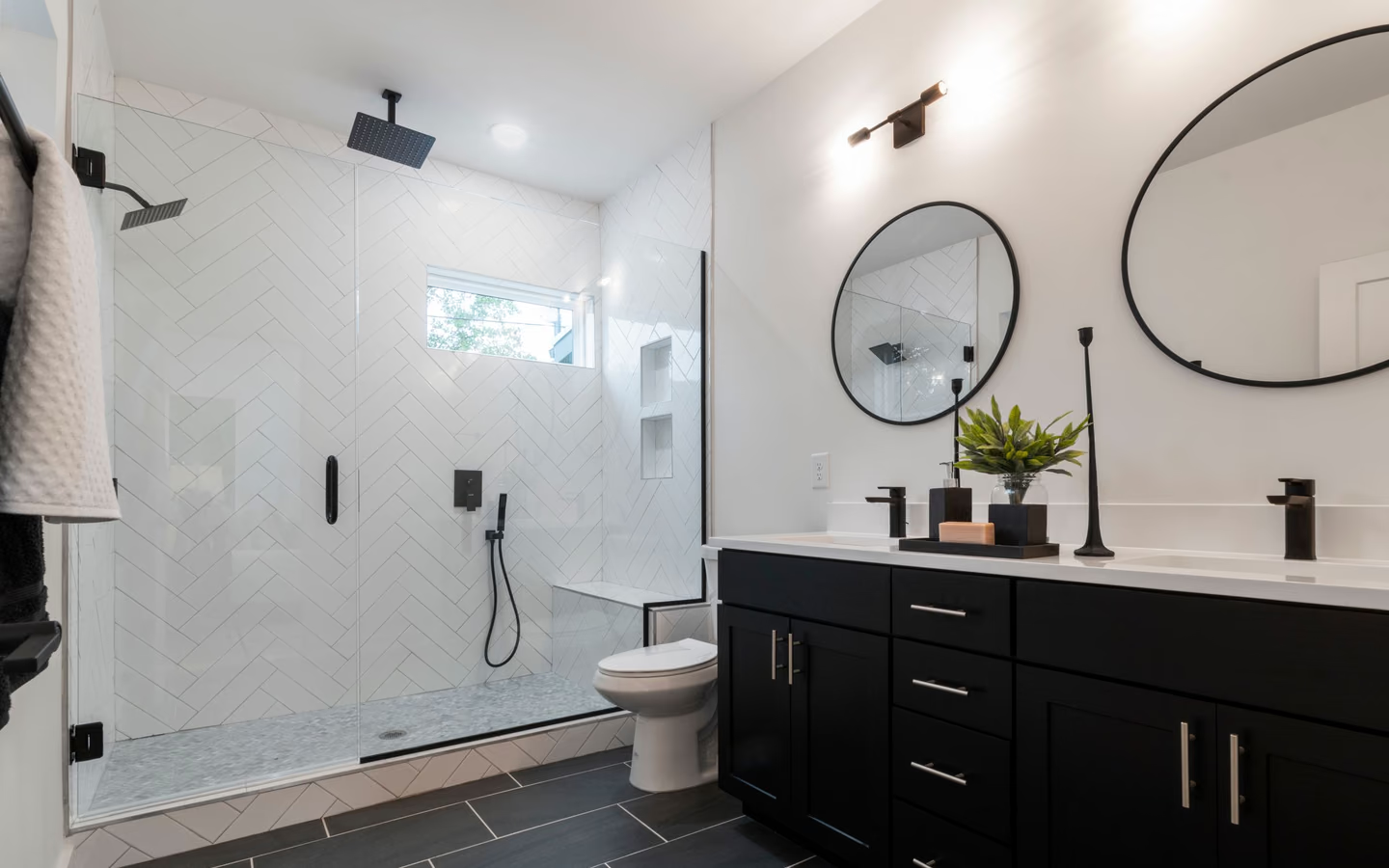
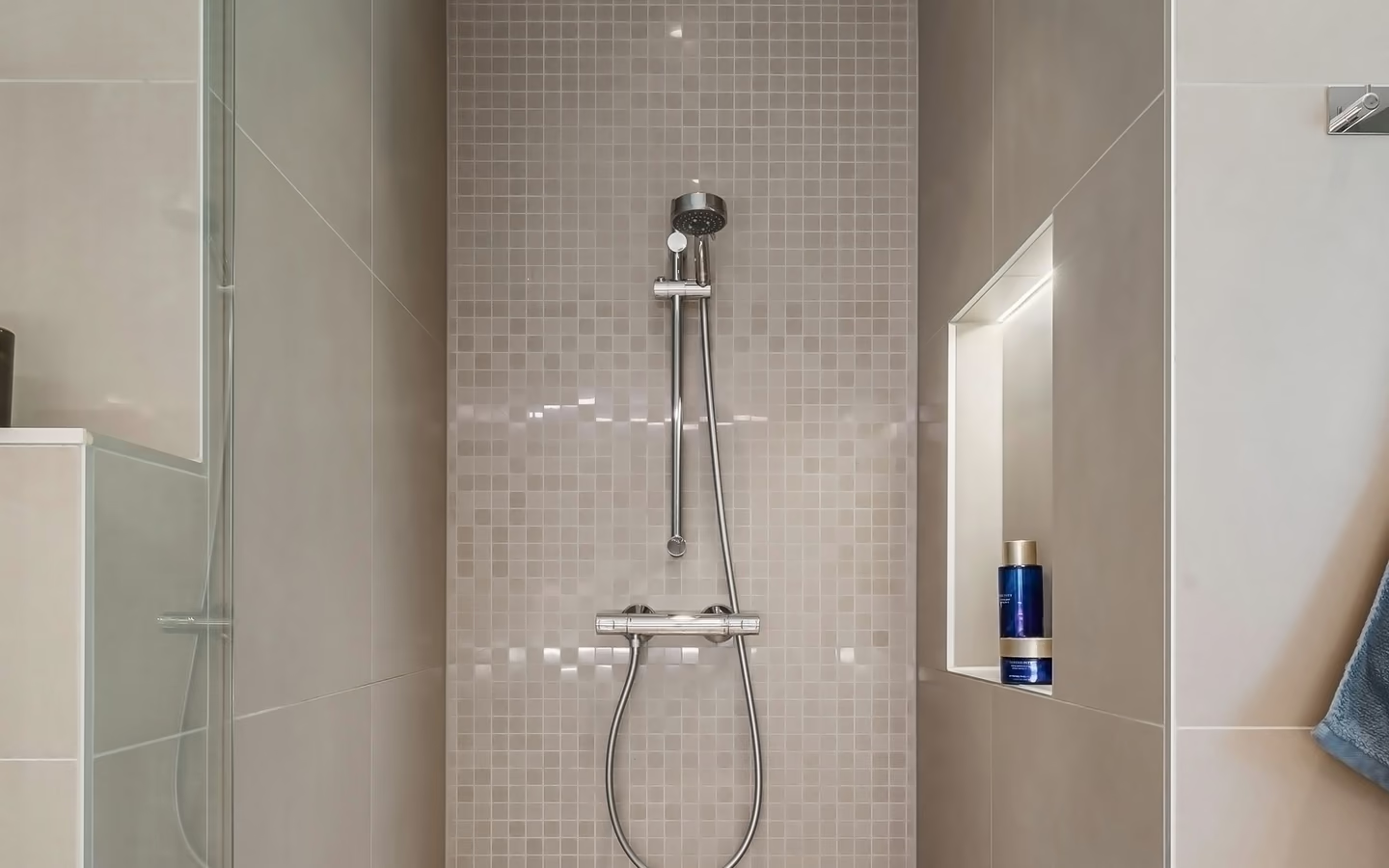
Choose custom tile when the space is nonstandard, the design matters, benches, niches, patterns, curbless entries, or long-term repairability appeals: individual tiles replace, grout renews, and the assembly under it follows published methods any qualified builder can execute and any future one can service. Its risk is execution dependence, which specification and testing manage.
Choose prefabricated when a standard footprint fits, schedule matters, and minimal joints appeal: factory-molded pans and panel systems arrive with their engineering built in, install to watertight quickly, and clean with the fewest seams in the industry. Their risks are fit rigidity, unit damage during install, and section-level repairs; quality tiers matter more than in tile, since bargain units age loudly.
Cost and schedule behavior
Custom pricing scales with geometry and format ambition, hours dominating materials; prefab pricing concentrates in unit tier, with labor compressed into days. At mid tiers the totals often land closer than assumed, because preparation and plumbing are shared and glass is glass either way.
Schedules diverge more than budgets: prefab returns service fastest, tile spends cure days buying its permanence. Households sequencing around a single bathroom weigh this difference heaviest.
The formats where they differ most
| Topic | What you gain | What you accept |
|---|---|---|
| Custom tile | Any size and design, tile-level repairs, methodical assembly per the handbook. | Craft hours, cure calendars, and quality living in the installer's discipline. |
| Prefabricated system | Engineered consistency, fast watertightness, minimal joints to maintain. | Fixed sizes, careful transport, section repairs, and tier-sensitive aging. |
| Pan-plus-tile hybrid | Factory floor precision under free wall design; the pragmatic middle. | Standard pan footprints only, and two systems meeting at one seam. |
Questions across both formats
- For tile: which method and membrane, and where does it cure and test?
Named systems with scheduled proof separate craft from confidence.
- For prefab: which tier, and what does its warranty actually cover?
Unit quality spreads widely; the warranty's exclusions describe the tier honestly.
- For either: what substrate preparation is included?
Both formats stand on the wall behind them; the preparation line predicts year nine.
Common questions
Frequently asked questions
Do prefab showers look cheap?
Bargain tiers can; current mid and upper tiers offer stone-look and large-panel finishes that photograph convincingly and clean brilliantly. The look ceiling has risen; the floor tiers still announce themselves.
Is tile harder to keep clean?
More joints ask more of maintenance, offset by grout technology and sealed systems; prefab's fewer seams genuinely win the wipe-down. Households choose between design duty and cleaning duty here, and both are legitimate.
Sources and methodology
Research & methodology
Sources
References supporting the planning guidance on this page.
- Occupational Employment and Wage StatisticsU.S. Bureau of Labor Statistics
- Bathroom Planning GuidelinesNational Kitchen & Bath Association
- 2025 TCNA Handbook for Ceramic, Glass, and Stone Tile InstallationTile Council of North America
- Showers FAQTile Council of North America
Share your project. Call when ready.
Turn your research into a clear project request
Share your project, full service address, and contact details securely, then call when you are ready to discuss availability with an independent professional.