
Showers and wet areas
How is a tile shower waterproofed?
Not by the tile. Tile and grout shed most water but are not waterproof; the layers beneath them are the actual system. Every durable tile shower is a designed assembly of sloped surfaces, a waterproofing membrane, a drain integrated with that membrane, and protected penetrations, built to recognized tile-industry methods. Understanding that much lets you ask the questions that separate careful builders from fast ones.
The direct answer
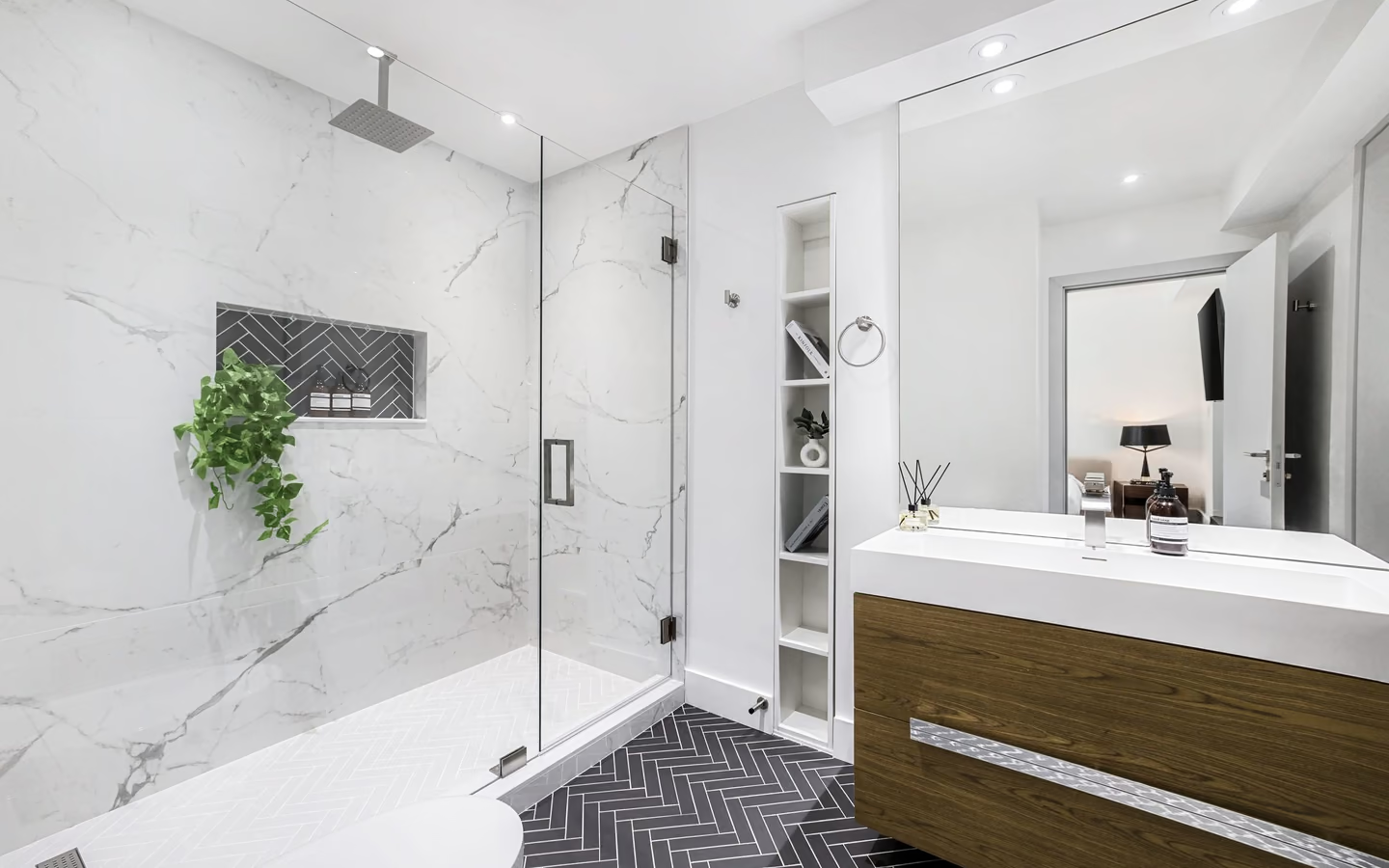
A tile shower is waterproofed by a continuous membrane system beneath or behind the tile: either a traditional assembly with a sloped mortar bed and pan liner, or a bonded-membrane assembly where sheet or liquid-applied membrane adheres directly to sloped substrates and the tile bonds to the membrane itself. In both families the floor slopes to a drain designed for that membrane type, walls carry a water-resistant layer integrated with the floor system, and corners, curbs, niches, benches, and every penetration are treated as designed details rather than caulked afterthoughts.
The tile industry's published methods define these assemblies, their materials, slopes, and cure requirements. The practical takeaway for a homeowner is that waterproofing is a system choice made before tile is selected, executed while everything is open, and impossible to verify after the fact, which is exactly why it belongs in the written scope by name.
What the system choice means for cost and schedule
The membrane system is a modest share of a rebuild's total cost and a large share of its lifespan, which makes it the worst place to economize and the best place to spend attention. Schedule-wise, both families carry non-negotiable waits: mortar beds cure before membrane or tile work proceeds, liquid membranes cure between coats and before flooding, and many builders run a flood or spray test that itself takes a day. Those pauses are the system working, not the project stalling.
Cost differences between the families are usually smaller than the cost difference between either done correctly and either done casually. Redoing a failed shower means demolition of brand-new tile, which is why the verification questions below are worth more than any material upgrade.
The two system families, compared honestly
Both build durable showers when executed to their method. The choice is about your project's conditions and your builder's demonstrated practice.
| Topic | How it manages water | Where it shines |
|---|---|---|
| Traditional mortar-bed and pan liner | Water that passes the tile migrates through the mortar bed to a liner sloped beneath it, draining through weep holes at the drain base. | Time-proven, tolerant of complex custom geometries, and familiar to crews trained in classic methods. |
| Bonded sheet or liquid membrane | Water is stopped at the tile's own substrate; the membrane is the surface the tile bonds to, keeping the assembly thin and dry. | Faster drying assemblies, integrated prefabricated slopes and drains, and details that are easier to verify visually before tile. |
Questions that verify the system
- Which assembly method are you building, by name?
A professional working to a recognized method can name it and its membrane products without hesitation. Vagueness here is vagueness about the only part of the shower you cannot inspect later.
- How does the drain integrate with the membrane?
The drain must match the system: weep-hole drains for pan liners, bonding-flange drains for bonded membranes. A mismatched drain is a designed leak.
- What cure times does your schedule carry, and where?
The honest answer names specific waits between substrate, membrane, testing, and tile. A schedule without them is a schedule planning to skip them.
- Will you photograph the membrane stage for my records?
Photographs of the completed membrane, details, and test are the only documentation of the system that will exist once tile covers it. Careful builders offer this without being asked.

Common questions
Frequently asked questions
Is grout sealer a form of waterproofing?
No. Sealer slows staining and surface absorption on cementitious grout; it does not make tile or grout waterproof and contributes nothing to the membrane system. A shower relying on sealer for water management has no water management.
My old shower never had a membrane and lasted decades. Why now?
Older mortar-bed showers often had a pan liner you never saw, and masonry-heavy construction tolerated moisture differently. Modern light framing and materials do not forgive water intrusion, and current methods reflect that; rebuilding today to yesterday's shortcuts gets neither era's durability.
Do large-format tiles change the waterproofing?
The membrane logic is identical, but large tiles demand flatter substrates and make slope geometry less forgiving, especially in compact pans. The system choice does not change; the preparation standard the system sits on gets stricter.
Sources and methodology
Research & methodology
Sources
References supporting the planning guidance on this page.
- 2025 TCNA Handbook for Ceramic, Glass, and Stone Tile InstallationTile Council of North America
- Showers FAQTile Council of North America
Share your project. Call when ready.
Turn your research into a clear project request
Share your project, full service address, and contact details securely, then call when you are ready to discuss availability with an independent professional.