Moisture, ventilation, and concealed conditions guide

The system behind the tile, explained

Waterproofing is the bathroom's concealed load-bearing idea: a continuous system of slopes, membranes, seams, and drain integrations that manages water the finishes merely decorate. This guide explains how the assembly works, exposure zones, substrates, slope logic, membrane types, corners and penetrations, movement, cure, and testing, so homeowners can ask for it by name.

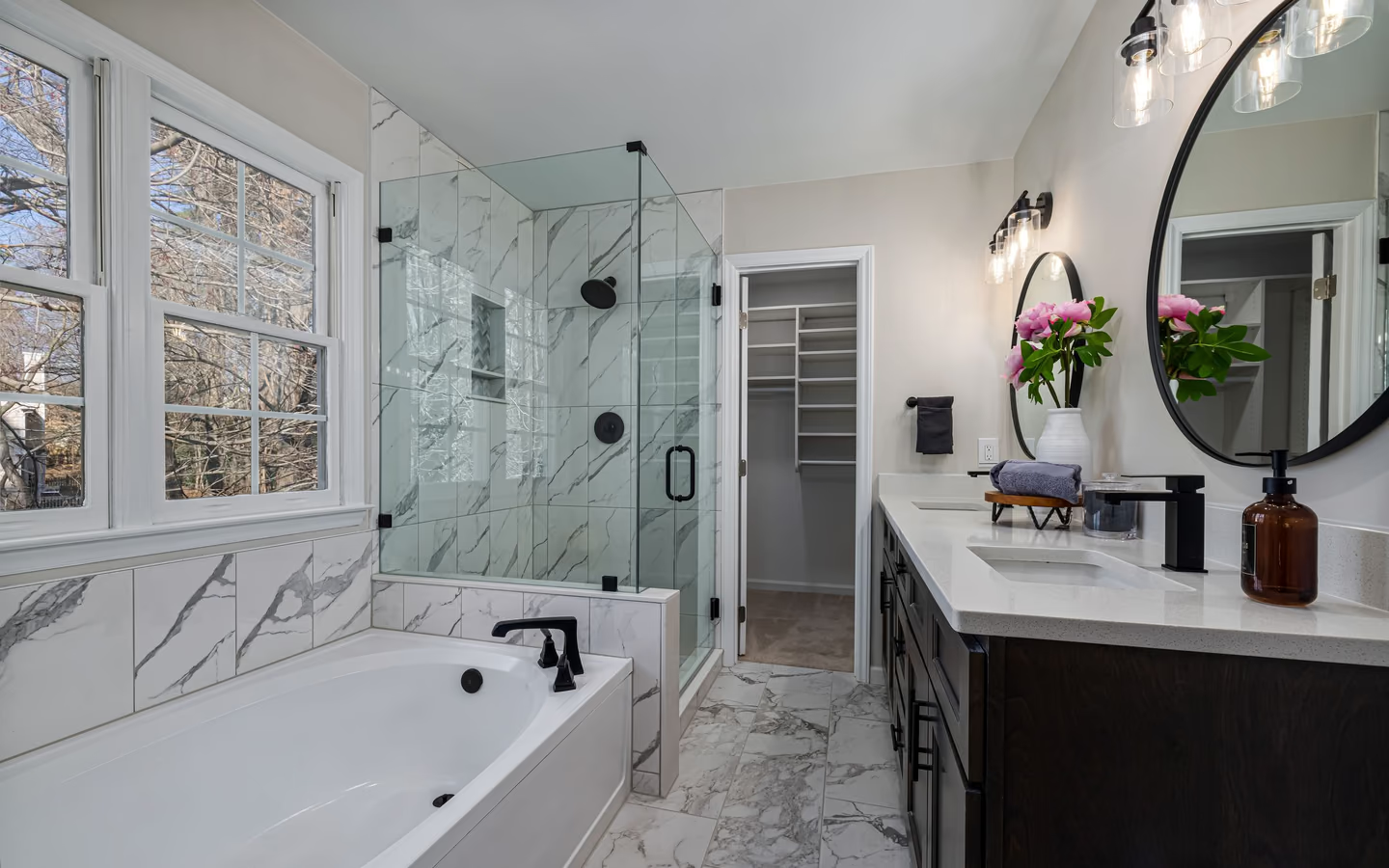
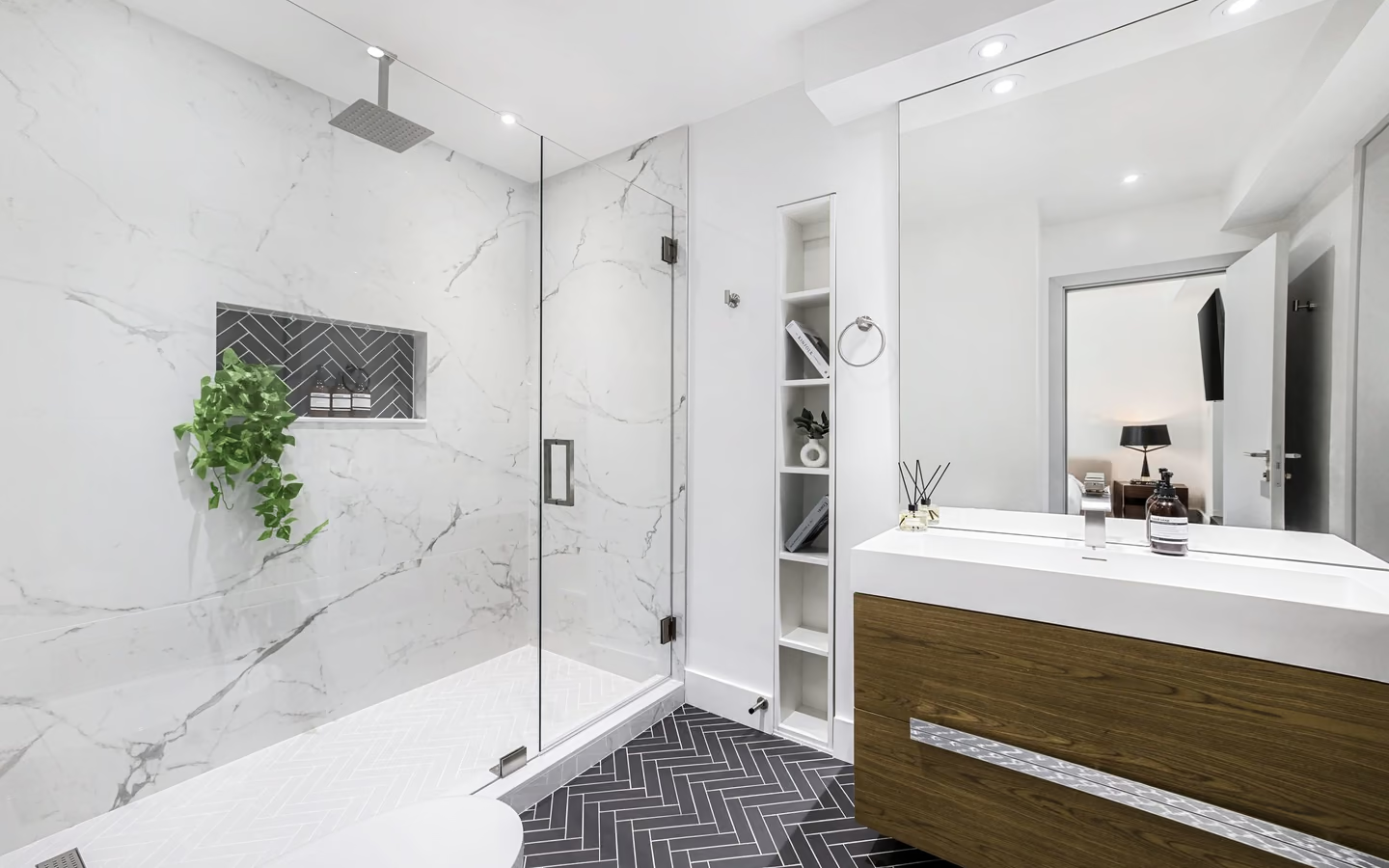
Luxurious bathroom with marble tile, a glass shower, indoor plants, and elegant lighting
Luxurious bathroom with marble tile, a glass shower, indoor plants, and elegant lighting.

How to understand the system

Hold one idea above the rest: continuity. Water explores every surface, seam, corner, and penetration, and the system works only where its protection is unbroken, membrane joined to membrane, membrane integrated with drain, corners and edges detailed rather than hoped. Every failure story is a continuity story: the gap at a niche, the unsealed penetration, the corner the schedule rushed.

Then learn the zoning: showers and their floors carry the strictest exposure and the fullest system; tub surrounds and wet walls carry heavy protection; the room's remaining floors and splash zones carry graduated defenses. Industry methods define the assemblies per zone, which is why the question which method is this built on has a real answer on professional projects.

The assembly, layer by layer

Slope comes first because water obeys it: shower floors slope to drains at every layer, not just the visible tile, with pre-slopes or bonded assemblies keeping even sub-tile moisture moving drainward. Horizontal surfaces everywhere, niche shelves, bench tops, curbs, sills, carry their own small slopes; a flat surface in a shower is a puddle with plans.

Membranes carry the headline duty in two families: sheet systems, applied and seamed with their drains as engineered pairs, and liquid-applied systems, painted continuous with reinforced corners and stated thicknesses. Both work when executed per method; the drain integration, where membrane meets the plumbing, is the most sensitive joint in either, engineered rather than improvised on every good project.

The details complete the system: backing boards appropriate to the method; corners, seams, and penetrations detailed with the system's own components; movement accommodated where planes meet, since buildings shift and rigid joints crack; cure times honored between layers because chemistry does not negotiate; and testing before tile, flood tests or method-appropriate verification, the one moment the system can prove itself while proof is still cheap.
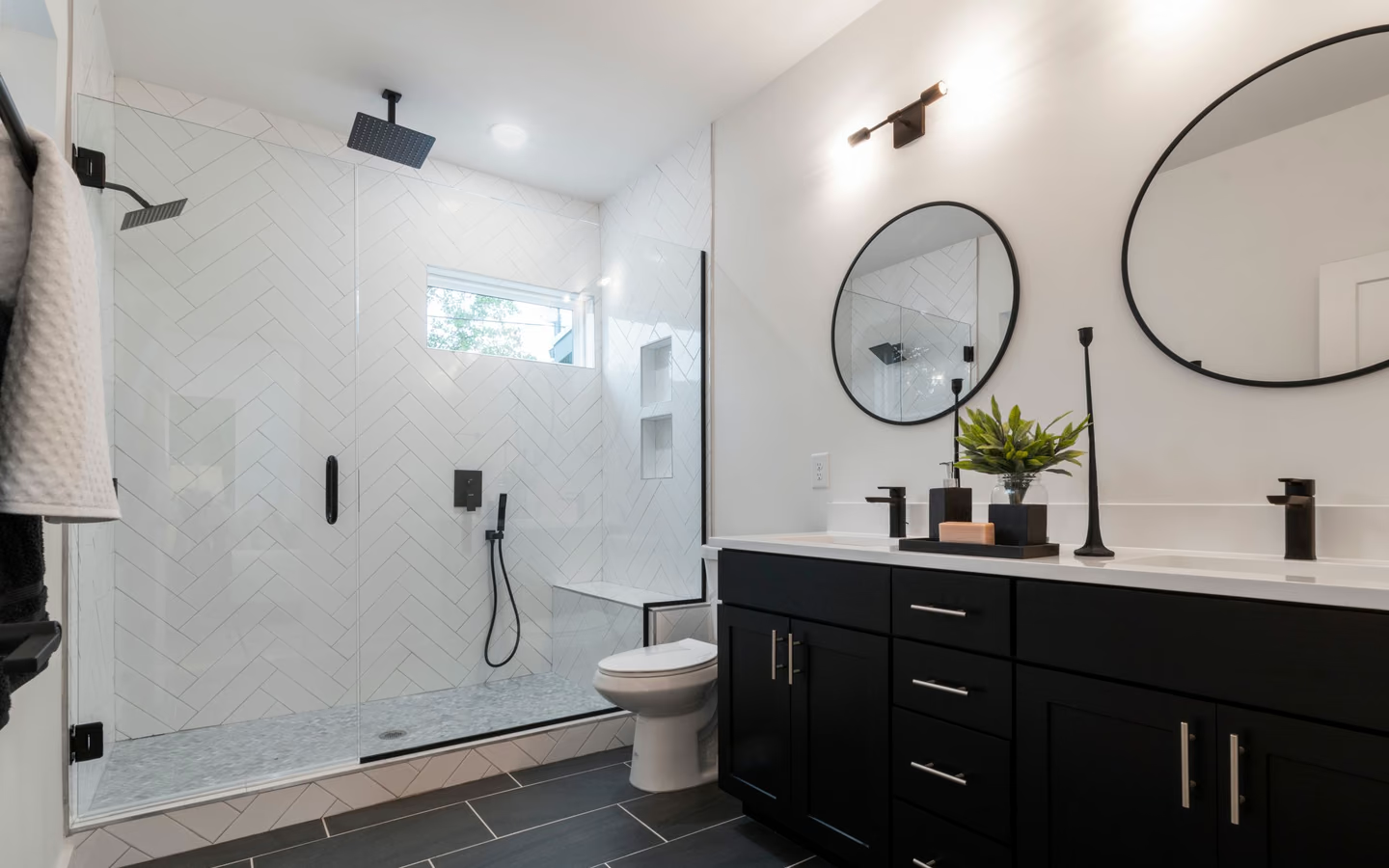
Wide modern bathroom with a wood vanity, marble shower, and herringbone flooring
Wide modern bathroom with a wood vanity, marble shower, and herringbone flooring.

System layers and their jobs

Each layer has one job; failures happen where a job went unassigned.

Waterproofing system layers with their functions.
TopicIts jobIts classic failure
SlopesKeep water moving drainward at every layer.Flat spots that store water under tile.
MembraneThe continuous waterproof plane, sheet or liquid.Thin spots, missed corners, unsealed seams.
Drain integrationMarry the membrane to the plumbing, engineered.The improvised joint that leaks below tile.
DetailsCorners, niches, benches, and penetrations sealed.The accessory nobody detailed.
Cure and testProve the system before concealment.The schedule that skipped the flood test.

The homeowner's waterproofing literacy list

You need not build the system; you need to ask for it. These lines do that.

Ask

  • Which recognized method the assembly follows

  • How the drain integration works in that method

  • Where the membrane starts and stops per zone

Expect

  • Slopes on every horizontal wet surface

  • Details from the system's own components

  • Cure times in the schedule, unnegotiated

Verify

  • A pre-tile test named in the contract

  • Photos of the membrane stage for the file

  • The tester's result recorded before tile

Bring these questions to the conversation

  • Which method is my shower built on, top to bottom?

    The literacy question that changes the whole conversation. Named methods make every detail checkable against published guidance.

  • How does the membrane meet my drain?

    The most failure-sensitive joint deserves its own explanation. Engineered pairings and bonded flanges are the vocabulary of a good answer.

  • What gets tested before tile, and how?

    Flood tests and method equivalents prove continuity at the only cheap moment. The test belongs in the contract, with its date.

  • Where does protection stop outside the shower?

    The zoning answer: what the wet walls, floors, and splash zones each carry. Graduated is normal; absent is not.

Common questions

Frequently asked questions

Is tile itself waterproof?

Tile and grout shed water but do not seal it out; moisture reaches the assembly behind, by design. The membrane system is the waterproofing; tile is its armor and its face, which is why beautiful tile over a skipped system fails on schedule.

Do modern membranes really need testing?

The products are excellent and the installations are human: testing exists because continuity fails at seams, corners, and drains regardless of product quality. A method-appropriate test before tile is cheap; discovery through a downstairs ceiling is not.

Sources and methodology

Research & methodology

Sources

References supporting the planning guidance on this page.

  1. Trade sourceAccessed
  2. Showers FAQTile Council of North America
    Trade sourceAccessed
  3. About MoldCenters for Disease Control and Prevention
    Government sourceAccessed

Share your project. Call when ready.

Turn your research into a clear project request

Share your project, full service address, and contact details securely, then call when you are ready to discuss availability with an independent professional.