Planning and budgeting template

One written scope, priced three ways

Proposals disagree because they price different imagined projects. A written scope of work ends that: room by room, item by item, it records what gets demolished, what stays, what gets installed, and what is explicitly out. This template shows the sections to fill in and the language that keeps them enforceable.

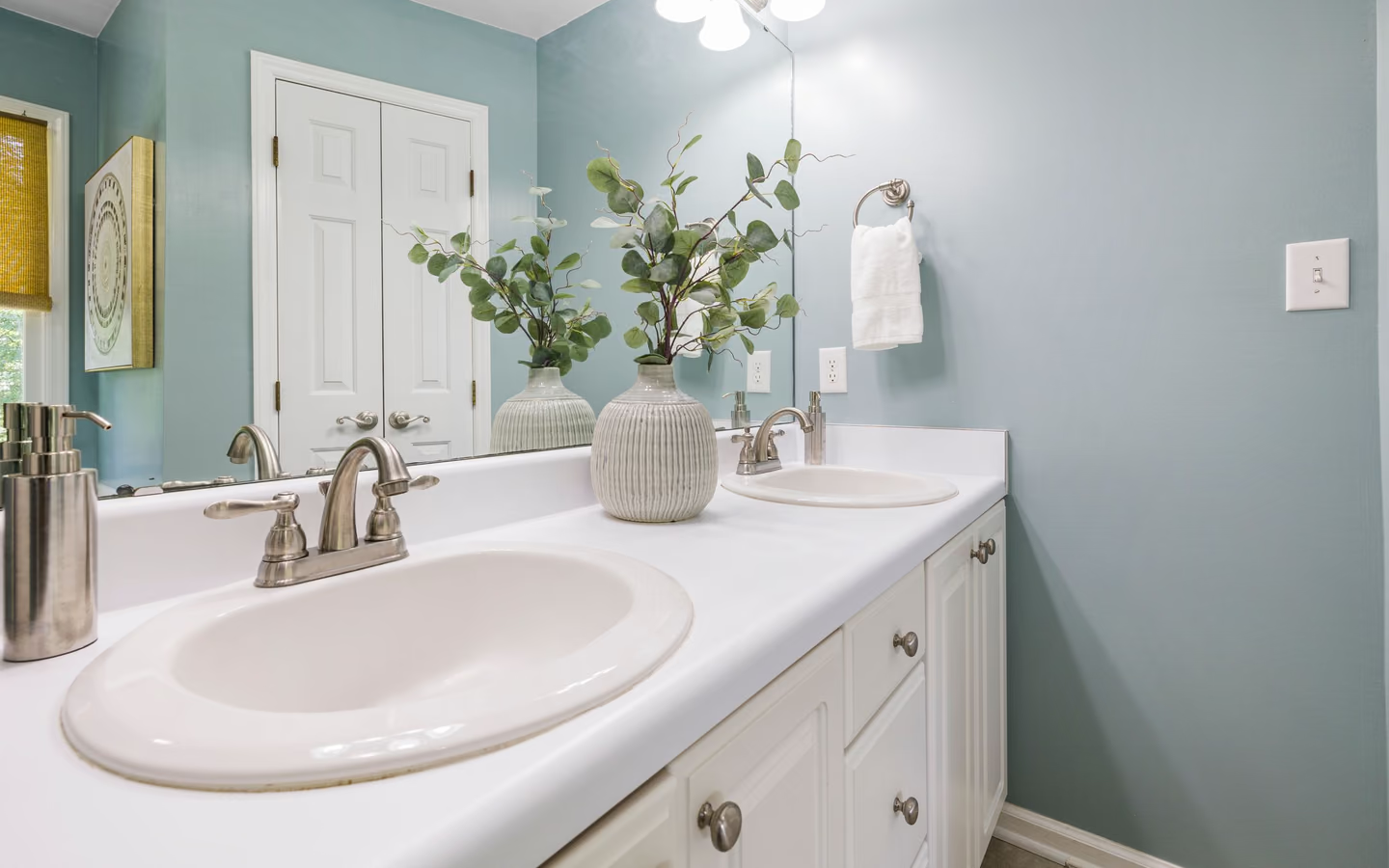
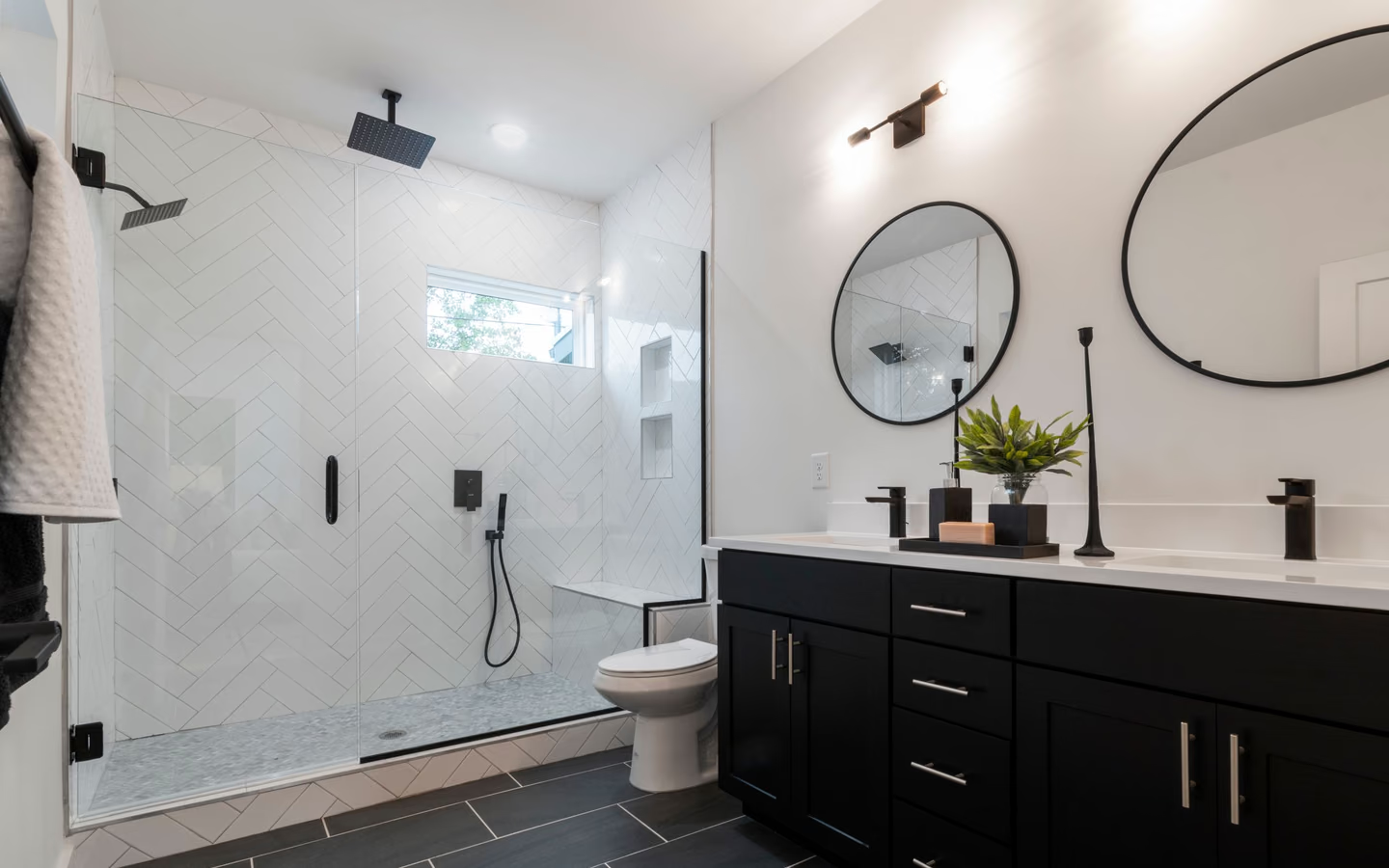
Bright contemporary bathroom with twin sinks, pale blue walls, and minimalist decor
Bright contemporary bathroom with twin sinks, pale blue walls, and minimalist decor.

How to use the template

Fill the sections in construction order, not shopping order: demolition and retained items first, then trade work, then products and allowances, then protection, testing, and exclusions. Writing in this order surfaces dependencies while they are still cheap to resolve, and it mirrors how a professional will read the document.

Write items as observable outcomes rather than intentions. A line like a new exhaust fan ducted to the exterior and verified under test can be inspected; better ventilation cannot. Wherever you cannot specify yet, write the allowance and its assumed quality level instead of leaving silence, because silence is where disputes are born.

What each section of the scope does

The demolition and retention section draws the project's boundary. Naming what stays is as protective as naming what goes: the tub you intend to keep, the flooring that continues into the hall, the vanity being reused. Unlisted items default to whatever the crew assumes on the day, and assumptions have a demolition bias.

The trade-work section converts wishes into systems: plumbing moves and replacements, electrical circuits and protection, ventilation routing, substrate and waterproofing work. This is the section professionals price most carefully and homeowners write most thinly. Even when you cannot specify the method, name the outcome you expect and where you expect verification.

Products and allowances carry the visible money. For each selected product, record the identifying number and finish; for each unselected one, a stated allowance and quality class. The exclusions section then closes the document by naming what this project deliberately does not include, which is the cheapest dispute insurance available.

Kept current, the scope becomes the project's memory: change orders amend it, selections complete it, and the final walkthrough audits against it. A scope that lives in a drawer was only ever a bid request.
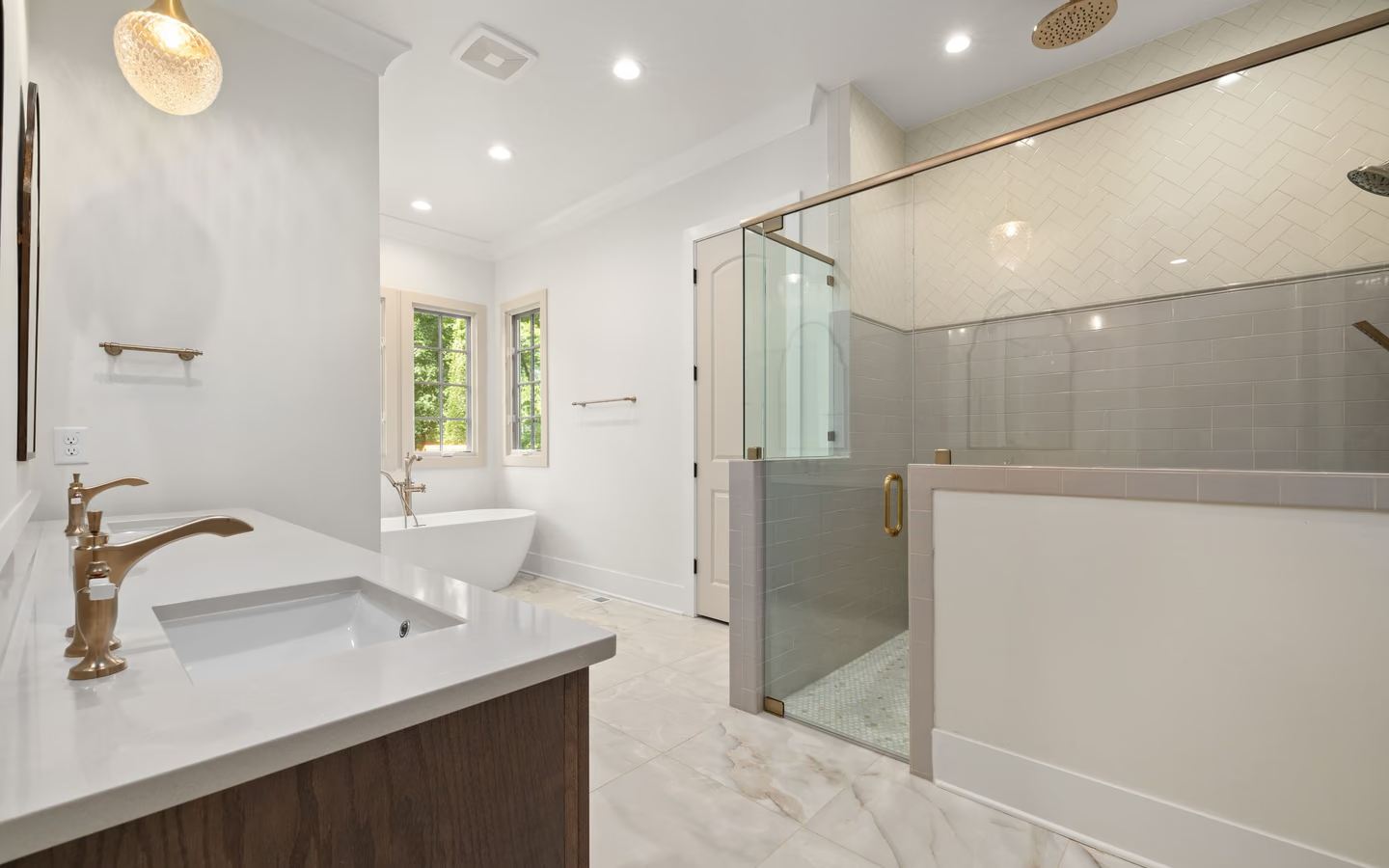
Bright modern bathroom with a glass shower, bathtub, warm wood vanity, and gold accents
Bright modern bathroom with a glass shower, bathtub, warm wood vanity, and gold accents.

Template sections and what belongs in each

The template repeats the same discipline section by section: observable items, named quantities, explicit gaps.

Scope template sections with the content each should hold.
TopicWhat belongs thereWhat it prevents
Demolition and retainedEverything removed, and everything that must survive the removal.The crew guessing which finishes and fixtures were meant to stay.
Trade workPlumbing, electrical, ventilation, substrate, and waterproofing outcomes.Concealed work priced as assumptions instead of commitments.
Products and allowancesIdentified selections, or stated allowances with a quality class.Allowance games and silent substitutions at install time.
Protection and testingDust boundaries, floor protection, and the checks done before closure.Damage disputes and unverified assemblies behind new finishes.
ExclusionsWhat this project deliberately does not include.The most expensive sentence in remodeling: I assumed that was included.

Scope completeness check

Before sending the scope out for pricing, confirm it survives these checks.

Every room surface

  • Floor, walls, ceiling each have a fate: replaced, refinished, or protected

  • Transitions to adjacent rooms are described

  • Retained items are listed with protection expectations

Every system

  • Plumbing changes written as outcomes with verification points

  • Electrical and ventilation work named, not implied

  • Waterproofing extent stated for every wet surface

Every gap

  • Unselected products carry allowances with quality classes

  • Exclusions section names the tempting assumptions

  • A revision date so versions cannot be confused

Bring these questions to the conversation

  • What would you add to this scope before pricing it?

    Invites the professional to close your blind spots in writing while the price can still respond. Additions at this stage are free; the same additions mid-project are change orders.

  • Which lines would you price as allowances, and at what quality?

    Reveals where the proposal will carry assumptions and lets you set the class rather than discovering it at the supplier counter.

  • Where does your standard practice differ from my scope?

    Every professional has house methods for waterproofing, substrates, and protection. Hearing the differences now prevents silent substitutions later.

  • Will your proposal reference this document by name?

    A proposal that incorporates the scope by reference makes the whole document enforceable. One that paraphrases it reopens every ambiguity you just closed.

Common questions

Frequently asked questions

Is a scope of work the same as a contract?

No. The scope describes the work; the contract adds parties, price, payments, schedule, and terms. A good contract incorporates the scope by reference, which is why the scope deserves to be written first and well.

How detailed is detailed enough?

Every surface and system has a stated fate, every product is either identified or covered by a classed allowance, and the exclusions are explicit. If a stranger could price the room from the document alone, it is done.

Sources and methodology

Research & methodology

Sources

References supporting the planning guidance on this page.

  1. Bathroom Planning GuidelinesNational Kitchen & Bath Association
    Trade sourceAccessed
  2. NAHB Remodeling Market IndexNational Association of Home Builders
    Trade sourceAccessed

Share your project. Call when ready.

Turn your research into a clear project request

Share your project, full service address, and contact details securely, then call when you are ready to discuss availability with an independent professional.