Hiring and project management template

One log for every product decision

Bathroom projects fail on decisions more often than on construction: the undecided tile that stalls a crew, the substitution nobody recorded, the finish that arrived in the wrong tone with no paper trail. A selection log fixes this: one current record of every product, its identifiers, status, and sign-off, that the whole team follows.

How to run the log

Create one document, any format the household will actually maintain, with a row per product decision: identifying number, finish, size, quantity, supplier, lead time, the date decided, and who signed off. Photograph or link each item. From that day forward, the rule is simple: if it is not in the log, it is not decided, and the log's latest revision is the only truth.

Share it with the professional and agree it governs. When the crew's paperwork and your log disagree, the discrepancy is found in a conversation instead of an installation. Update it the day anything changes, because a log updated weekly is a diary, while a log updated same-day is a control system.

What the log catches that memory cannot

Substitutions are the log's first catch. Products go unavailable mid-project constantly, and replacements arrive described as equivalent. The log turns equivalence into a checkable claim: same size, same finish designation, same performance specification, or a documented, signed-off difference. Without the row, the substitution is discovered installed.

Lead-time collisions are the second. Every row carries a lead time, and reading lead times against the construction calendar exposes the collisions while they are still solvable: the fabricated glass measured too late, the special-order fixture that should have been ordered at signing. The log converts scheduling from the professional's private worry into a shared dashboard.

The sign-off column does the quiet legal work. Recording who confirmed each selection, and when, ends the archaeology that otherwise happens when a finish looks wrong in afternoon light: was this the chosen tone, or a drift? One column answers in seconds what emails answer in hours, and the answer arrives without an argument attached.
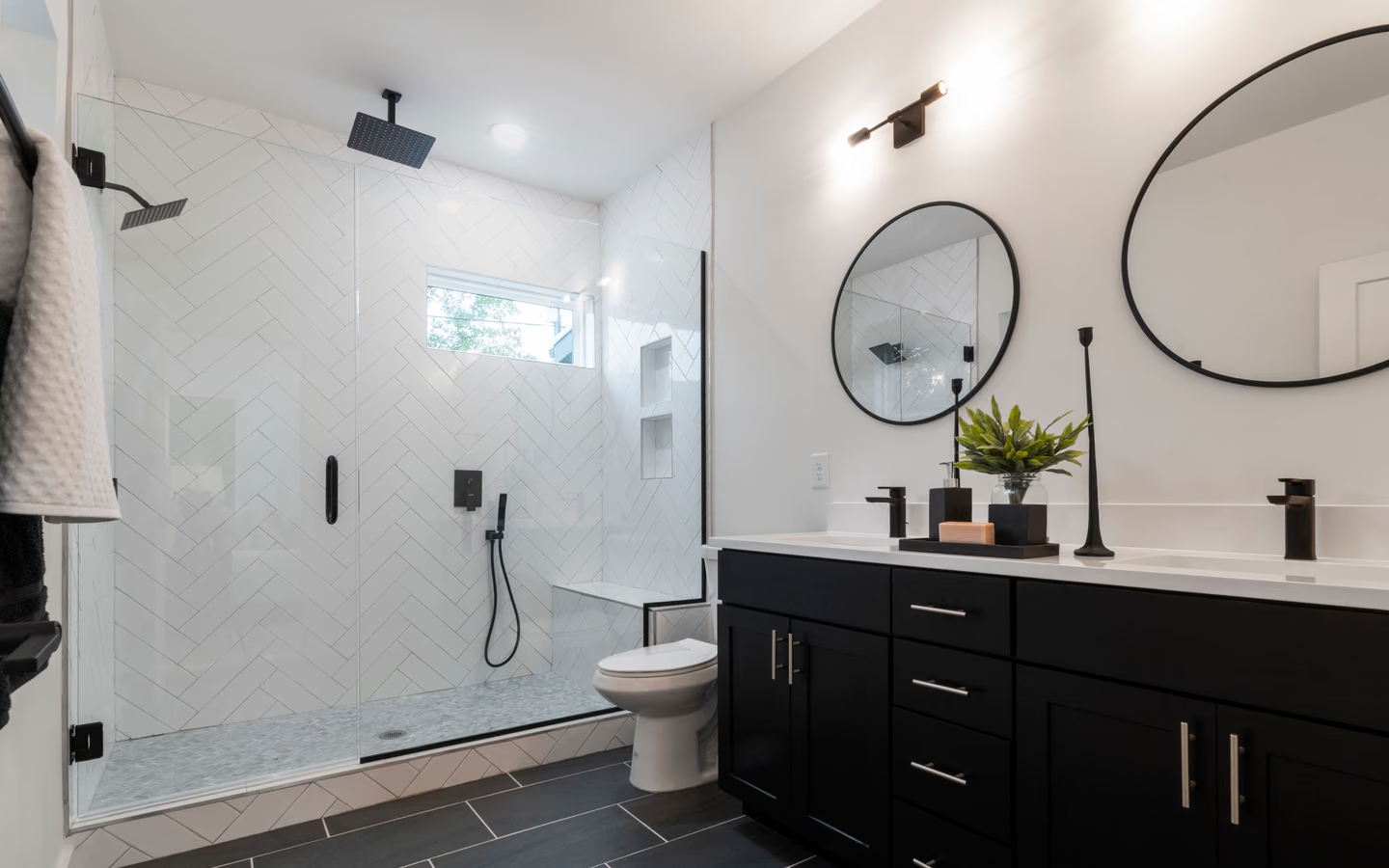

Contemporary bathroom with a black vanity, twin round mirrors, and a glass shower
Contemporary bathroom with a black vanity, twin round mirrors, and a glass shower.

Log columns and the failure each prevents

The columns look bureaucratic until the day each one saves the project. Here is the mapping.

Selection-log columns with the failure mode each exists to stop.
TopicWhat it recordsThe failure it prevents
IdentifiersProduct number, finish designation, size, quantity.Right product, wrong finish: the classic install-day discovery.
StatusProposed, decided, ordered, delivered, installed.Everyone assuming someone else placed the order.
Lead timeSupplier promise plus a buffer for reality.A finished room waiting weeks for one late component.
Sign-offWho confirmed, and the date.Post-installation debates about who chose what.
ChangesSubstitutions and revisions with reasons.Silent drift from the design everyone agreed on.

Selection-log setup and rhythm

An afternoon of setup, then minutes per week, is the whole cost.

Set up

  • One log created with the columns above

  • Every known selection entered with identifiers

  • The governing-document rule agreed with your professional

Maintain

  • Same-day updates when anything changes

  • Weekly reads of lead times against the calendar

  • Photos attached for every visual product

Enforce

  • No order placed on items missing sign-off

  • Every substitution gets a row before it gets a box

  • The current revision date visible on page one

Bring these questions to the conversation

  • Will your team work from my log, or do you keep your own?

    Either answer works if there is exactly one truth. If they keep their own, agree how the two reconcile and which governs when they differ.

  • Which items on this log would you order first, and why?

    Converts their lead-time experience into your ordering sequence. The answer usually reorders your assumptions about what is urgent.

  • How will substitutions reach me for sign-off?

    Agree the channel and the information each substitution request carries: the difference, the reason, and the price effect, before the replacement ships.

  • What selections does your schedule need by what dates?

    Gets the decision deadlines out of their planning software and onto your calendar, which is where late selections are actually prevented.

Common questions

Frequently asked questions

Is this overkill for a small project?

Scale the log, not the discipline. A powder room might need eight rows; the eight rows still prevent the same eight failures. Small projects have small margins for a wrong-finish reorder too.

Paper, spreadsheet, or app?

Whichever the household will genuinely keep current, because a stale log is worse than none: it radiates false confidence. The columns matter; the container does not.

Sources and methodology

Research & methodology

Sources

References supporting the planning guidance on this page.

  1. Bathroom Planning GuidelinesNational Kitchen & Bath Association
    Trade sourceAccessed

Share your project. Call when ready.

Turn your research into a clear project request

Share your project, full service address, and contact details securely, then call when you are ready to discuss availability with an independent professional.