Hiring and project management guide

Allowances: the flexible numbers, explained

An allowance is a placeholder wearing a price tag: real money reserved for a product not yet chosen. Handled well, allowances keep a project moving before every selection exists; handled loosely, they are how a firm-looking total quietly grows. This guide explains what they cover, what they exclude, and how overages and credits actually calculate.

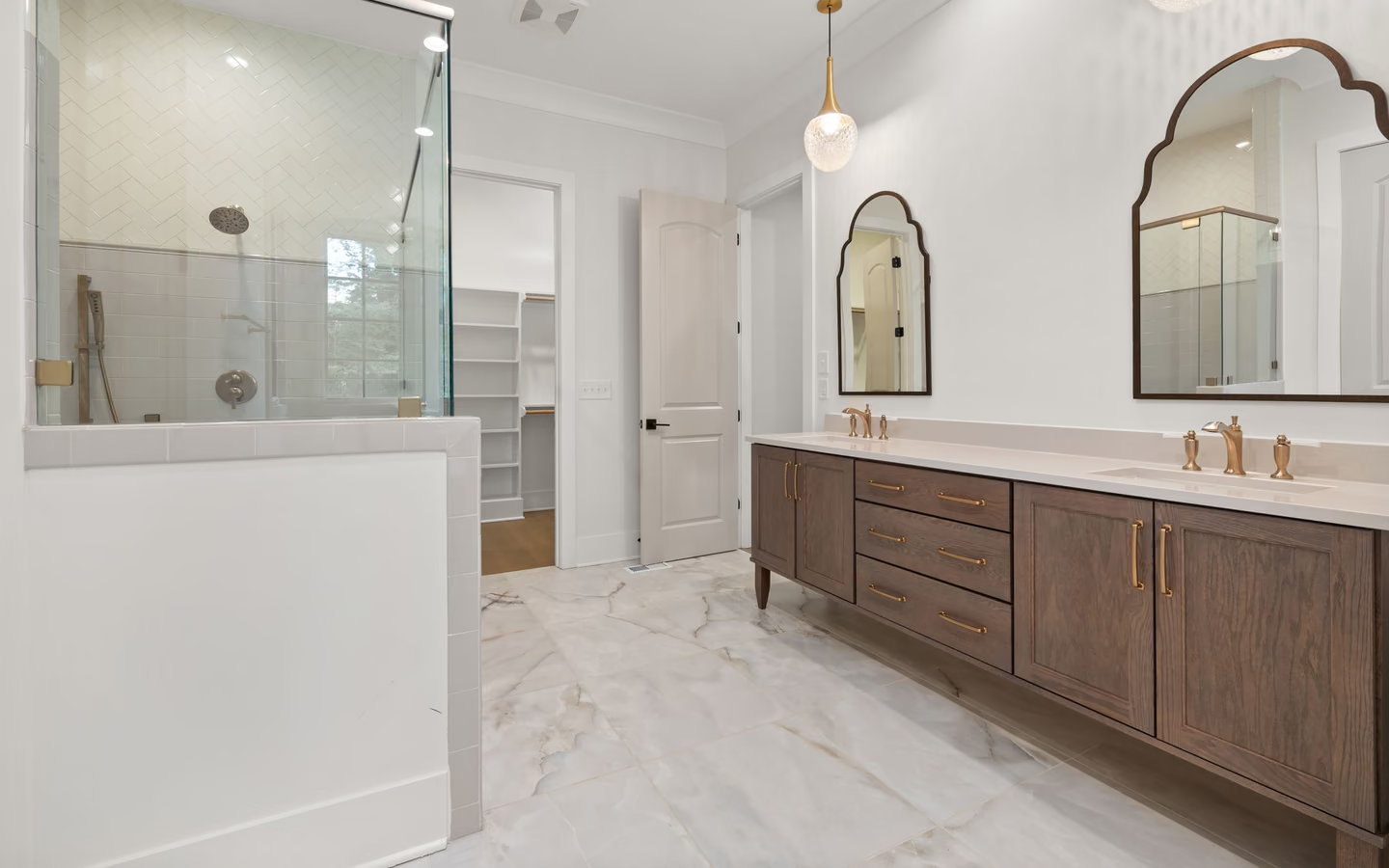
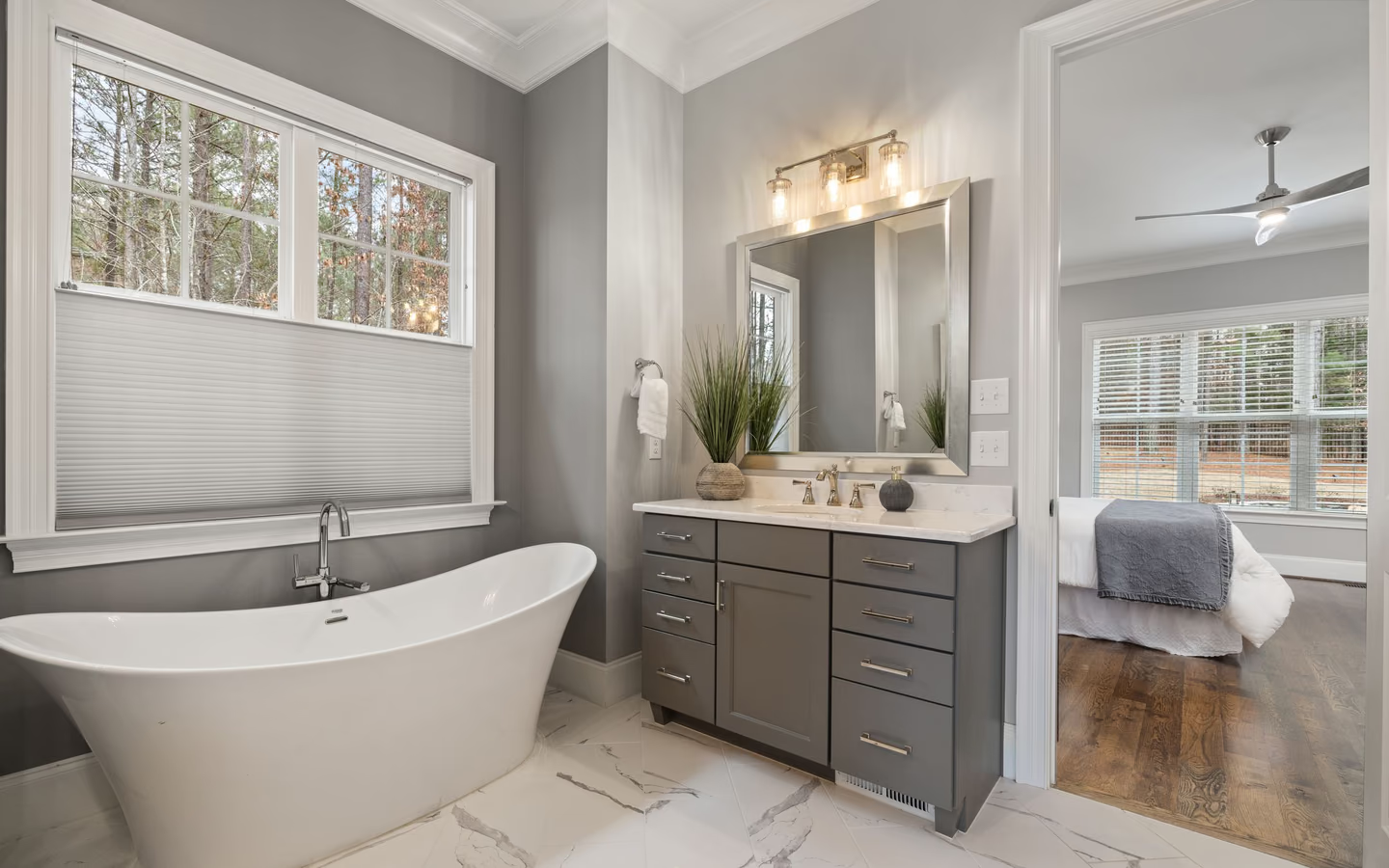
Updated transitional bathroom with a tailored double vanity, framed mirrors, and a glass shower
Updated transitional bathroom with a tailored double vanity, framed mirrors, and a glass shower.

How to read any allowance

For each allowance, extract four facts: what exactly it covers, product only or product plus labor; what quantity it assumes; what quality class its number can really buy locally; and when your selection is due before it affects the schedule. An allowance missing any of the four is not a number, it is a mood, and moods reconcile badly at invoice time.

Then test the classes against reality early. Visit the supplier or review the actual lines your allowance figures reach, before demolition if possible. Discovering that the tile allowance buys builder-grade while your saved photos are premium is a cheap Tuesday errand in week one and an expensive emotional event in week five.

Where allowance money actually moves

Coverage boundaries cause the first surprises. A fixture allowance may cover the faucet but not the valve behind it; a tile allowance may cover material but not the upgraded setting work a large format demands. Ask what related costs live outside each allowance, because the boundary lines are where totals grow without any line visibly changing.

Quantity assumptions cause the second wave. Allowances price an assumed amount, area of tile with a waste factor, a count of fixtures, and your selection can change consumption: larger formats change cuts and waste, patterns add quantity, a heavier product adds handling. Overage math should adjust quantity and price transparently, and the assumed quantities belong in writing at signing.

Credits deserve equal rigor. Selecting below an allowance should return the difference by the documented markup rules, not vanish into the project. How a professional handles allowance credits, cheerfully and in writing, or vaguely and reluctantly, is one of the cleaner honesty signals available before you have to trust them with a bigger one.
The four facts behind every allowance

Run each allowance in your proposal through the four rows; blanks are questions to ask this week.

The facts each allowance must state to be comparable.
TopicWhat to pin downWhy it moves money
CoverageProduct only, or product plus labor, delivery, and setting materials.Boundary items surface later as additions nobody flagged.
QuantityThe assumed area or count, including waste factors.Your selection changes consumption; math should follow transparently.
Quality classWhat the figure buys at the professional's actual suppliers.The same number buys different realities across supply chains.
DeadlineWhen the selection is due without touching the schedule.Late selections stall trades and surface as delay you caused.

Allowance discipline for your project

These habits keep placeholders from becoming plot twists.

At proposal

  • Every allowance's four facts stated in writing

  • Boundary costs asked about and noted per allowance

  • Markup rules for overages and credits documented

Before demolition

  • Classes tested against real products at real suppliers

  • Selection deadlines mapped onto the project calendar

  • The largest allowance converted to a firm selection if possible

During the project

  • Each selection confirmed in writing against its allowance

  • Overages and credits appearing in the change log

  • Running allowance total tracked beside the contingency

Bring these questions to the conversation

  • What does this allowance figure buy from your usual sources?

    The class-reality test, asked before it can hurt. Have them show you the actual product lines the number reaches, not a category name.

  • What related costs sit outside this allowance?

    Surfaces the boundary items: valves behind faucets, setting upgrades behind large tile, delivery behind heavy fixtures. Boundaries found now are boundaries priced now.

  • How exactly do overages and credits calculate?

    You want the markup treatment in both directions, in writing. Symmetric math is the mark of a clean operation.

  • Which selections are due when?

    Converts allowance deadlines into calendar entries. Late selections are the most homeowner-preventable delay in remodeling; the calendar is the cure.

Common questions

Frequently asked questions

Are allowances a sign of a lazy estimate?

Not inherently; they are honest placeholders for undecided products. The signal is specificity: allowances with stated coverage, quantity, class, and deadlines mark a careful estimator, while bare numbers mark future arguments.

Should I minimize allowances before signing?

Converting the largest allowances to firm selections before signing shrinks the flexible zone where totals drift. Total elimination is rarely practical, but the big-ticket items, tile, fixtures, glass, reward early decisions disproportionately.

Sources and methodology

Research & methodology

Sources

References supporting the planning guidance on this page.

  1. Occupational Employment and Wage StatisticsU.S. Bureau of Labor Statistics
    Government sourceAccessed
  2. Bathroom Planning GuidelinesNational Kitchen & Bath Association
    Trade sourceAccessed
  3. NAHB Remodeling Market IndexNational Association of Home Builders
    Trade sourceAccessed

Share your project. Call when ready.

Turn your research into a clear project request

Share your project, full service address, and contact details securely, then call when you are ready to discuss availability with an independent professional.