Planning and budgeting comparison

Four finish classes, honestly compared

Finish level is where budgets are won, lost, and quietly renegotiated at showroom counters. This comparison puts value-conscious, standard, premium, and custom side by side on the axes that matter: material price, fabrication, preparation demands, installation precision, maintenance, and lead time, so you can set priorities per surface and hold them.

How to compare classes without fooling yourself

Judge each class on total installed reality, not shelf price. Materials that demand flatter substrates, tighter tolerances, or specialty fabrication carry their premium in labor as much as product, and that labor is where showroom math falls apart. When you compare two tiles, you are also comparing two preparation standards.

Assign classes per surface, not per room. The wet-area walls the household sees and touches daily can justify a class the ceiling paint never will. Write the class beside each surface in your scope, then treat upgrades as explicit trades: name what moves up, what pays for it, and what stays fixed no matter what, which should always be the concealed assemblies.

What each class really buys

Value-conscious buys function with dignity: ceramic in standard formats, stock vanities and glass, proven mid-line fixtures. Its risk is not quality but coherence; discipline in color and finish keeps a value room looking chosen rather than assembled from what was available.

Standard is the market's center of gravity: porcelain in common large formats, semi-custom cabinetry, name-brand fixtures with full parts availability. It exists because it balances material cost against installation forgiveness, and most rooms that photograph well above their budget live here.

Premium and custom separate on fabrication and tolerance. Premium buys denser materials, larger formats, and hardware with better mechanisms; custom buys geometry, one-piece surfaces, fabricated glass, built-to-room cabinetry, and demands substrate flatness and installer skill to match. Custom's lead times also become schedule facts: fabricated pieces are measured after finishes exist, and the calendar must absorb that.

Across all four, one rule holds: the finish class may vary, the concealed class may not. Waterproofing, substrates, and system work have a single acceptable standard, and any proposal that economizes there to fund visible sparkle has the priorities exactly backwards.
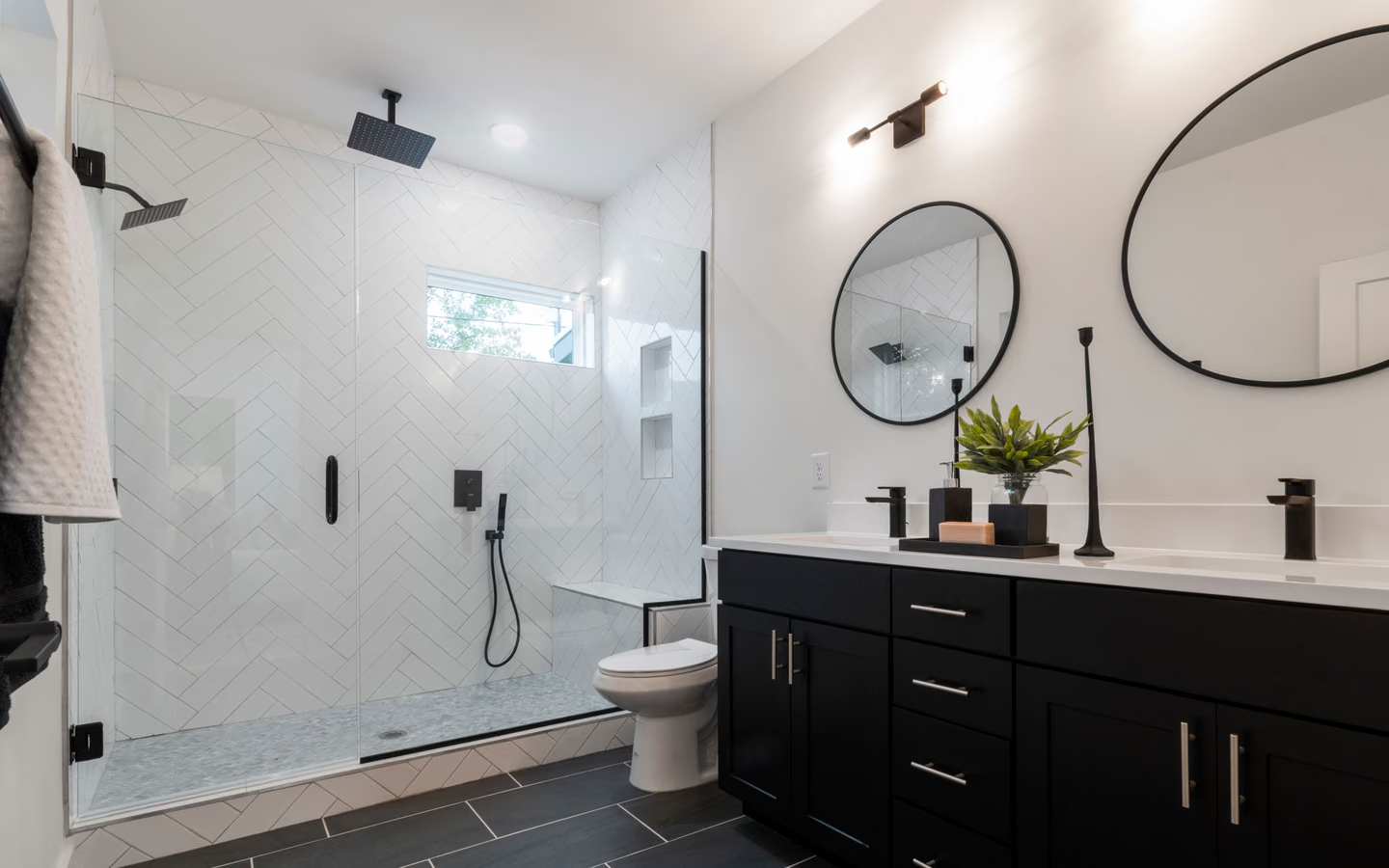
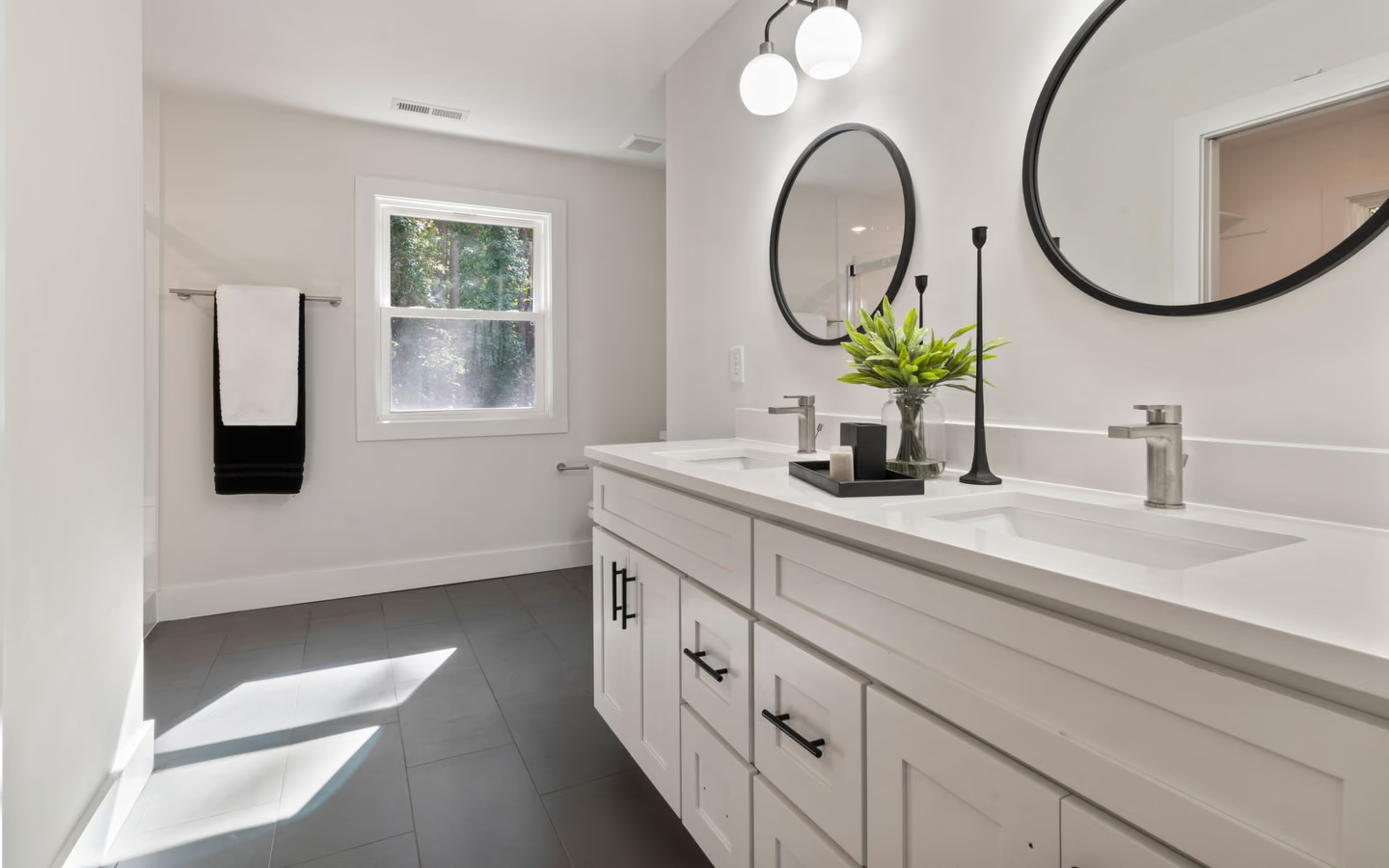
Contemporary bathroom with a black vanity, twin round mirrors, and a glass shower
Contemporary bathroom with a black vanity, twin round mirrors, and a glass shower.

The four classes across the axes that matter

Read your priority surfaces down the table and note where the class jump actually changes daily life.

Finish classes compared on cost drivers and living consequences.
TopicWhere the money goesWhat daily life notices
Value-consciousProven materials in standard formats; labor stays forgiving.Function and cleanability; coherence depends on disciplined choices.
StandardBetter materials and semi-custom storage; moderate precision demands.Noticeably better touch points and storage that fits the household.
PremiumDenser surfaces, larger formats, better mechanisms; tighter tolerances.Quieter drawers, cleaner lines, fewer joints to maintain.
CustomFabrication, one-piece surfaces, built-to-room everything; longest lead times.Geometry made for this room; also the strictest cleaning and care contracts.

Set the classes and make them stick

Do this on paper before any showroom visit; showrooms are designed to undo it.

Assign

  • A class written beside every visible surface in the scope

  • The two surfaces that earn the highest class and why

  • The surfaces where value-conscious is genuinely fine

Protect

  • Concealed assemblies marked as non-negotiable, never trade stock

  • A written rule for what funds any mid-project upgrade

  • Lead-time consequences confirmed before any custom commitment

Verify

  • Samples viewed in the room's own light before final selection

  • Maintenance expectations read for each chosen material

  • Parts and replacement availability checked for fixtures

Bring these questions to the conversation

  • Where in my selections does labor cost jump, not just material?

    Reveals the hidden half of finish pricing: the formats and details that demand preparation and precision. Sometimes one small step down in format saves real installed money.

  • Which premium choices do you see clients regret or never notice?

    Installers watch households live with selections for years. Their list of upgrades nobody notices is free budget recovered.

  • What would you never economize on in this room?

    The right answer centers concealed assemblies and water management. An answer centered on visible surfaces tells you how the proposal was built.

  • How do lead times for my custom items land on the schedule?

    Fabricated pieces measured after tile can hold a finished room hostage. Get the measurement-to-installation window stated before committing.

Common questions

Frequently asked questions

Is mixing classes in one room a design mistake?

It is the professional norm. A premium wet area inside a standard room reads intentional when color and finish stay coordinated; what reads as a mistake is inconsistency within one visual field, not across zones.

Do higher finish classes add resale value?

Sometimes, in some markets, and never reliably enough to promise. Choose classes for the household that lives there; treat any future pricing response as unknowable rather than as a return on investment.

Sources and methodology

Research & methodology

Sources

References supporting the planning guidance on this page.

  1. Bathroom Planning GuidelinesNational Kitchen & Bath Association
    Trade sourceAccessed
  2. Trade sourceAccessed
  3. NAHB Remodeling Market IndexNational Association of Home Builders
    Trade sourceAccessed

Share your project. Call when ready.

Turn your research into a clear project request

Share your project, full service address, and contact details securely, then call when you are ready to discuss availability with an independent professional.