The era realities and their handling
Structure and geometry come as found: joists sistered by generations, framing at spacings modern fixtures never expected, floors settled out of level, and dimensions snug against modern clearance guidance. The responses are measurement and honest design, leveling strategies priced openly, fixtures scaled to the real room, and structural touches engineered rather than improvised, plus a contingency sized to a house that has had time to accumulate stories.
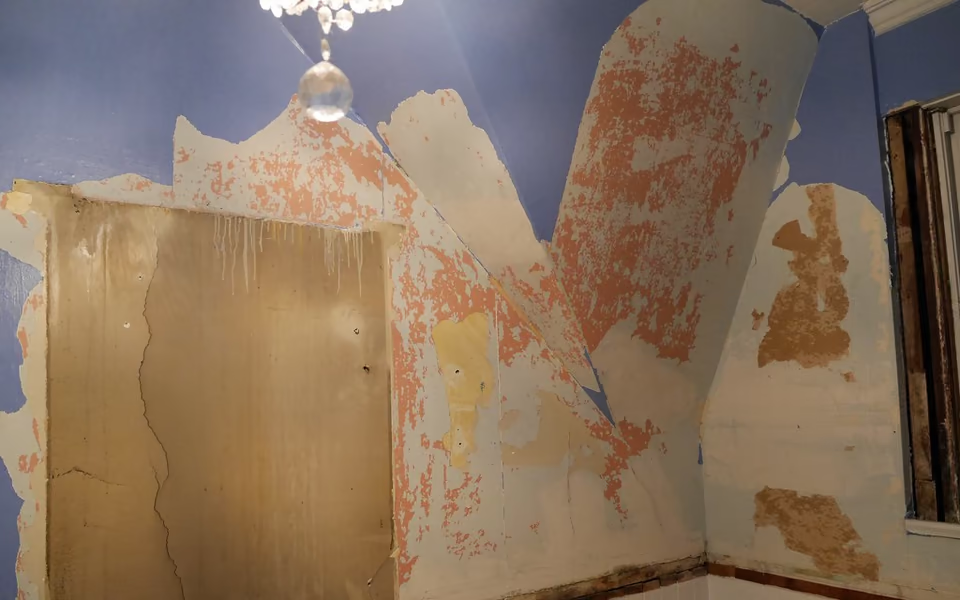
Systems carry vintages: supply and drain materials with known aging arcs, wiring methods from before modern protection, and the accumulated splices of a century's repairs. Opened walls are the assessment moment, replace on evidence and ride the open-wall discount where symptoms and eras argue for it, and the permit process fits naturally here, since system corrections are exactly what review exists to verify.
Character is the older bathroom's asset side: plaster returns, cast fixtures, original tile, and trim profiles that new construction cannot buy. Salvage-versus-replace deserves case-by-case honesty, refinishing a worthy tub, repairing plaster where it holds, photographing and matching trim, and compatible repair, materials and methods that move with the old house rather than against it, is the difference between renovation and erasure. The best older-home professionals speak both languages: current standards inside the walls, period respect outside them.