Hiring and project management guide

Put the paperwork where the calendar needs it

Permits and inspections are not bureaucratic weather; they are schedule dependencies with fixed positions. This sequence guide covers determining jurisdiction requirements, deciding who applies, assembling documents, and placing rough and final inspections at the right points in the calendar, plus handling corrections and keeping closure records.

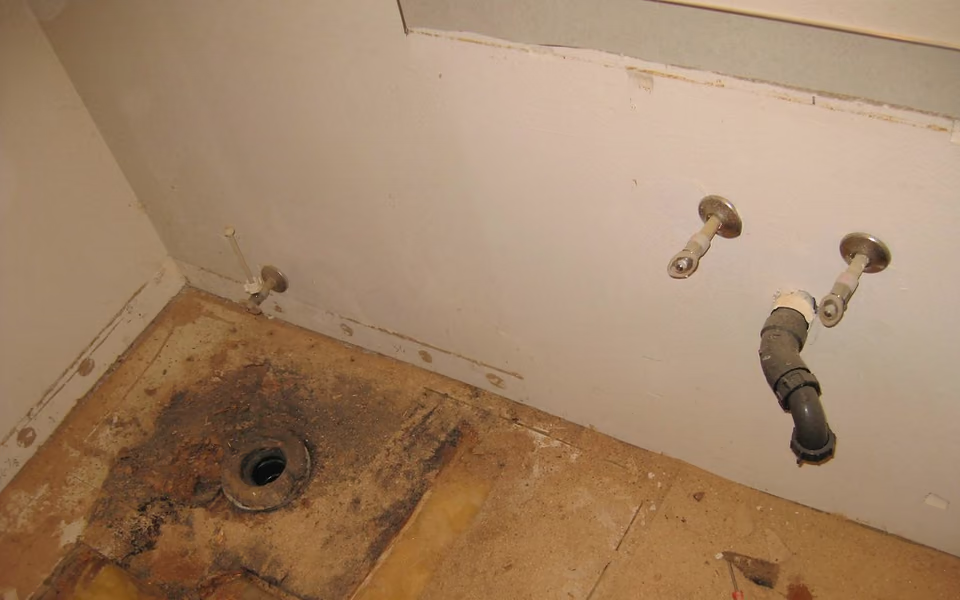
Bathroom cleared for renovation with fixtures and finished floor removed
Bathroom Remodel - Bathroom Empty

How to sequence the administrative work

Resolve three questions before demolition: whether your scope requires permits in your jurisdiction, who applies, in most professional projects, the contractor, and what documents the application needs. Requirements vary by location and scope; the professional working in your area regularly should know the local reality cold, and their fluency here is itself a hiring signal.

Then place the inspection points on the project calendar as dependencies: rough inspections happen after systems are installed but before walls close, and finish work cannot start until they pass. Treat inspection scheduling lead times as real calendar items, and keep the correction loop in mind: a failed item needs rework and reinspection before anything downstream proceeds.

Where the process actually bites schedules

The wall-closing gate is the big one. Work that covers uninspected systems may need to be reopened, which is the most expensive way to learn the sequence. A crew that schedules rough inspections proactively and holds wall closure until sign-off is running the project correctly even when it feels slower that week.

Correction handling is the second bite. Inspection items are common, minor, and only a problem when treated as insults instead of punch lists: the professional response is fix, reschedule, pass, with the correction documented. Watch for the schedule buffer around inspection points; a calendar with zero slack there is a calendar built on hope.

Closure paperwork is the long-tail value. Final sign-offs and the permit record itself belong in your project file, because future buyers, insurers, and refinance appraisals sometimes ask, and because the record proves the concealed work was verified. An unclosed permit discovered years later is a headache entirely preventable in the project's final week.
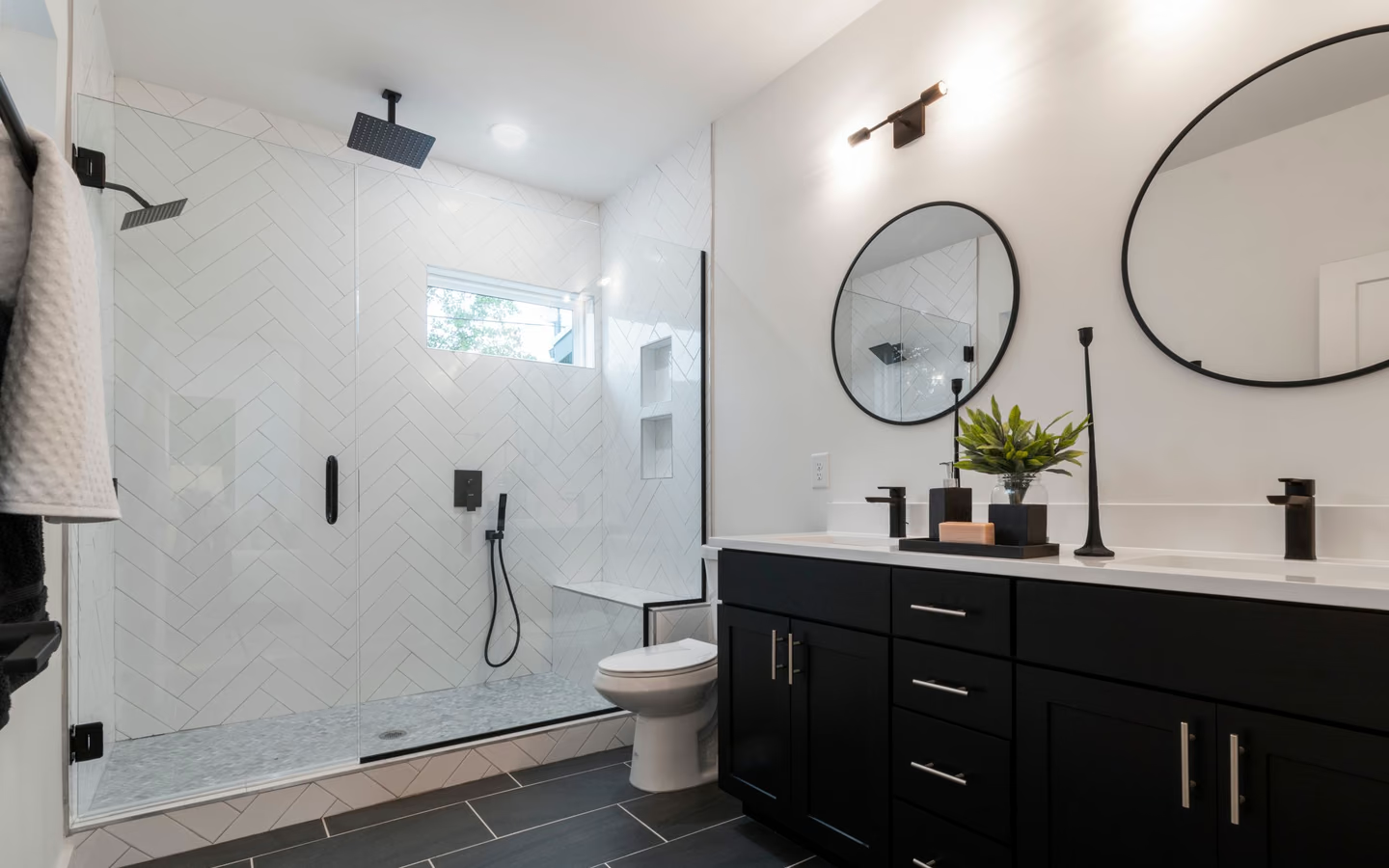

Contemporary bathroom with a black vanity, twin round mirrors, and a glass shower
Contemporary bathroom with a black vanity, twin round mirrors, and a glass shower.

Administrative milestones in calendar order

The milestones are dependencies: each row must resolve before the work it gates.

Permit and inspection milestones with their calendar positions.
TopicWhen it happensWhat it gates
Requirement checkBefore contracts finalize, during scoping.Accurate pricing and a schedule with real dependencies.
ApplicationBefore work begins, with documents assembled.The legal start of covered work.
Rough inspectionsSystems installed, walls still open.Wall closure and everything after it.
CorrectionsImmediately after any failed item.Reinspection, then downstream trades.
Final and closureWork complete, before the file closes.Your records, and a clean answer for future transactions.

Your administrative file

Keep one folder, digital or paper, holding every line below by project end.

Before work

  • Written confirmation of what the scope requires locally

  • Who applies, stated in the contract

  • Application copies and reference numbers

During work

  • Rough inspection outcomes with dates

  • Correction items and their resolution notes

  • Any revision paperwork if scope changed

At closeout

  • Final sign-offs collected

  • Permit closure confirmed, not assumed

  • The whole folder archived with the project records

Bring these questions to the conversation

  • What does my scope require in this jurisdiction?

    A professional working locally should answer without hedging. Vagueness about local requirements from someone who claims local experience is a serious signal.

  • Who applies, and does the schedule include the timelines?

    You are confirming ownership of the task and that application and inspection lead times appear on the project calendar, not just in optimistic conversation.

  • How do you handle a failed inspection item?

    The professional answer is boring: fix, document, reschedule, pass. What you are listening for is the absence of drama and the presence of schedule buffer.

  • What paperwork will I hold at closeout?

    Sets the expectation that sign-offs and closure records transfer to you. The project file you keep is the durable value of the administrative work.

Common questions

Frequently asked questions

Do all bathroom remodels need permits?

Requirements vary by jurisdiction and scope: like-for-like finish replacement often does not, while system alterations frequently do. The reliable path is confirming locally before work starts rather than reasoning from a general rule.

Is a permit worth it when the work could skip it?

The inspection record is verification of concealed work and a clean story for future transactions. Skipping required review to save days trades a small known cost for an open-ended one.

Sources and methodology

Research & methodology

Sources

References supporting the planning guidance on this page.

  1. Standards sourceAccessed
  2. Bathroom Planning GuidelinesNational Kitchen & Bath Association
    Trade sourceAccessed

Share your project. Call when ready.

Turn your research into a clear project request

Share your project, full service address, and contact details securely, then call when you are ready to discuss availability with an independent professional.