Hiring and project management checklist

Ready the house before the first swing

Demolition day goes one of two ways: a crew walks into a prepared home and starts working, or into an unprepared one and starts improvising around your belongings. This preconstruction checklist covers the household side: clearing and protecting, access and parking, pets, shutoffs, temporary bathing, communication, and the hazard questions that must precede disturbance.

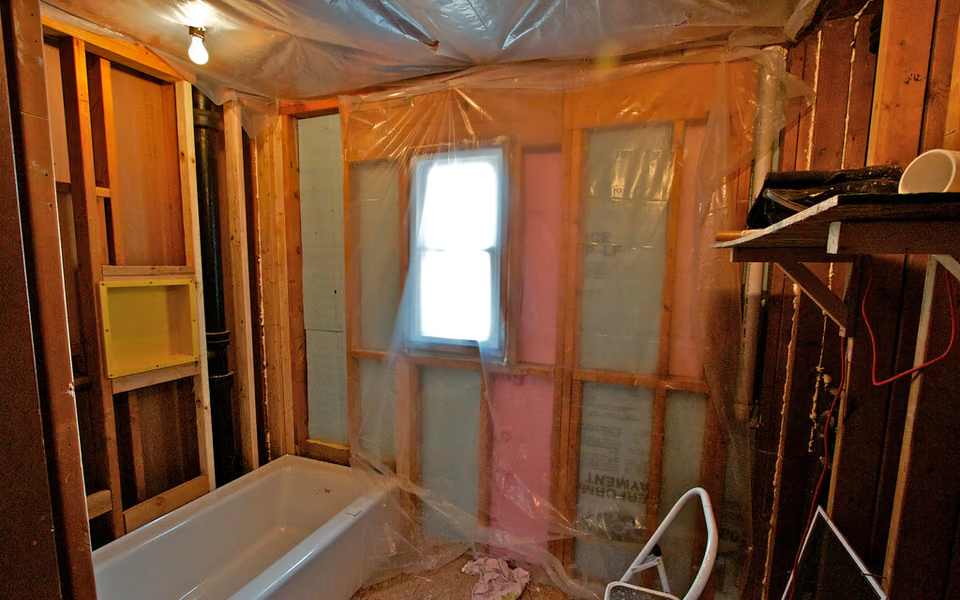
Bathroom demolition with wall cavities and insulation exposed
Bathroom Remodel - Day 7

How to run the preparation week

Work backward from demolition day. A week out: confirm the hazard conversation is resolved, decide the temporary bathing plan, and start clearing the bathroom and its approach. Two days out: finish clearing, protect what stays, and walk the access route as if you were carrying a tub through it. The night before: valuables secured, pets planned, questions written for the morning conversation.

Then hand off deliberately. The first-morning walkthrough with the crew lead is worth thirty minutes of anyone's time: agree the work zone boundary, the route, the protection standard, where materials stage, where debris goes, and how daily communication works. Everything agreed at that walkthrough is a decision; everything skipped is an improvisation someone else makes for you.

The preparation that pays off most

Clearing beats covering. Everything left in or near the work zone becomes either an obstacle or a casualty: empty the bathroom completely, clear the hallway route, and strip walls along the path, because hammer vibration travels farther than people expect and picture frames are its favorite victims. What cannot move gets named in the protection conversation explicitly.

The hazard questions cannot wait for demolition morning. In homes of certain ages, materials that may require testing and qualified handling should be discussed and resolved before anything is disturbed; this is a stop-and-confirm item, not a note. Raise it with your professional in the planning phase and get the answer in writing.

Utilities and logistics round it out: know where water shuts off, both locally and at the house, agree how shutoffs get announced, and set the parking and driveway reality for a crew that arrives with a trailer. Pets deserve real plans, not hopes; a stressed animal and an open front door is a bad combination the calendar can prevent.


Preparation areas in priority order

If time runs short, work the rows top to bottom; the top rows prevent the expensive failures.

Pre-demolition preparation areas by priority.
TopicWhat to doWhat it prevents
Hazard questionsResolve testing and handling questions before any disturbance.A mid-swing stop, or worse, a contaminated improvisation.
Clear and protectEmpty the room and route; strip walls along the path.Damage disputes and a crew working around your belongings.
ShutoffsLocate valves, test them, agree the announcement rule.House-wide surprises and a seized valve found at the worst time.
Temporary bathingA plan people will actually use, plus a backup.Week-two morale collapse in a one-bathroom home.
Access and petsParking, route, staging, debris, and animal arrangements.Daily friction that erodes the crew relationship.

The countdown checklist

Everything below is done before the crew arrives, most of it days before.

One week out

  • Hazard conversation resolved in writing

  • Bathing plan and backup decided

  • Bathroom emptied down to the walls begun

Two days out

  • Route cleared and wall items removed along it

  • Water shutoff located and tested

  • Protection expectations agreed for what stays

The morning

  • Walkthrough with the crew lead completed

  • Work hours, communication channel, and decision-maker confirmed

  • Emergency contacts exchanged both directions

Bring these questions to the conversation

  • What do you need from the house to start fast?

    Lets the crew name their ideal staging, access, and clearing. Meeting it costs you an evening and buys a crew that starts working instead of arranging.

  • What protection do you install, and what should I handle?

    Draws the responsibility line explicitly: their floor protection and containment, your valuables and clearing. Lines drawn in advance never become disputes.

  • How will shutoffs be announced?

    Agree the notice period and channel now. A surprise dry house at dinner time is entirely preventable with one sentence of process.

  • What is the plan if something hazardous is suspected mid-demolition?

    The right answer involves stopping, assessment by qualified people, and written authorization before proceeding. Confirm the stop-work reflex exists before it is needed.

Common questions

Frequently asked questions

Should I do any demolition myself to save money?

Discuss it before assuming: unpermitted or unskilled demolition can disturb hazards, damage systems meant to stay, and void the professional's responsibility for conditions. Where owner demolition makes sense, define its exact boundary in writing.

What about the rest of the house's air during demolition?

Containment and air handling are the crew's tools; your contribution is closed doors, covered vents near the zone, and patience with the containment staying up. Ask how the zone will be isolated and hold the answer as a standard.

Sources and methodology

Research & methodology

Sources

References supporting the planning guidance on this page.

  1. Bathroom Planning GuidelinesNational Kitchen & Bath Association
    Trade sourceAccessed
  2. About MoldCenters for Disease Control and Prevention
    Government sourceAccessed
  3. Steps to Lead Safe Renovation, Repair and PaintingU.S. Environmental Protection Agency
    Government sourceAccessed
  4. Government sourceAccessed

Share your project. Call when ready.

Turn your research into a clear project request

Share your project, full service address, and contact details securely, then call when you are ready to discuss availability with an independent professional.