
Moisture and ventilation
Does a bathroom need an exhaust fan?
Almost always yes in practice, and usually yes by rule. Model building codes require bathroom ventilation, and while an operable window can technically satisfy the baseline in some editions, mechanical exhaust ducted outdoors is the reliable path and mandatory where no window exists. The daily reason is simpler than the code: every shower loads the room with moisture, and moisture that is not removed finds finishes, framing, and air quality.
The direct answer
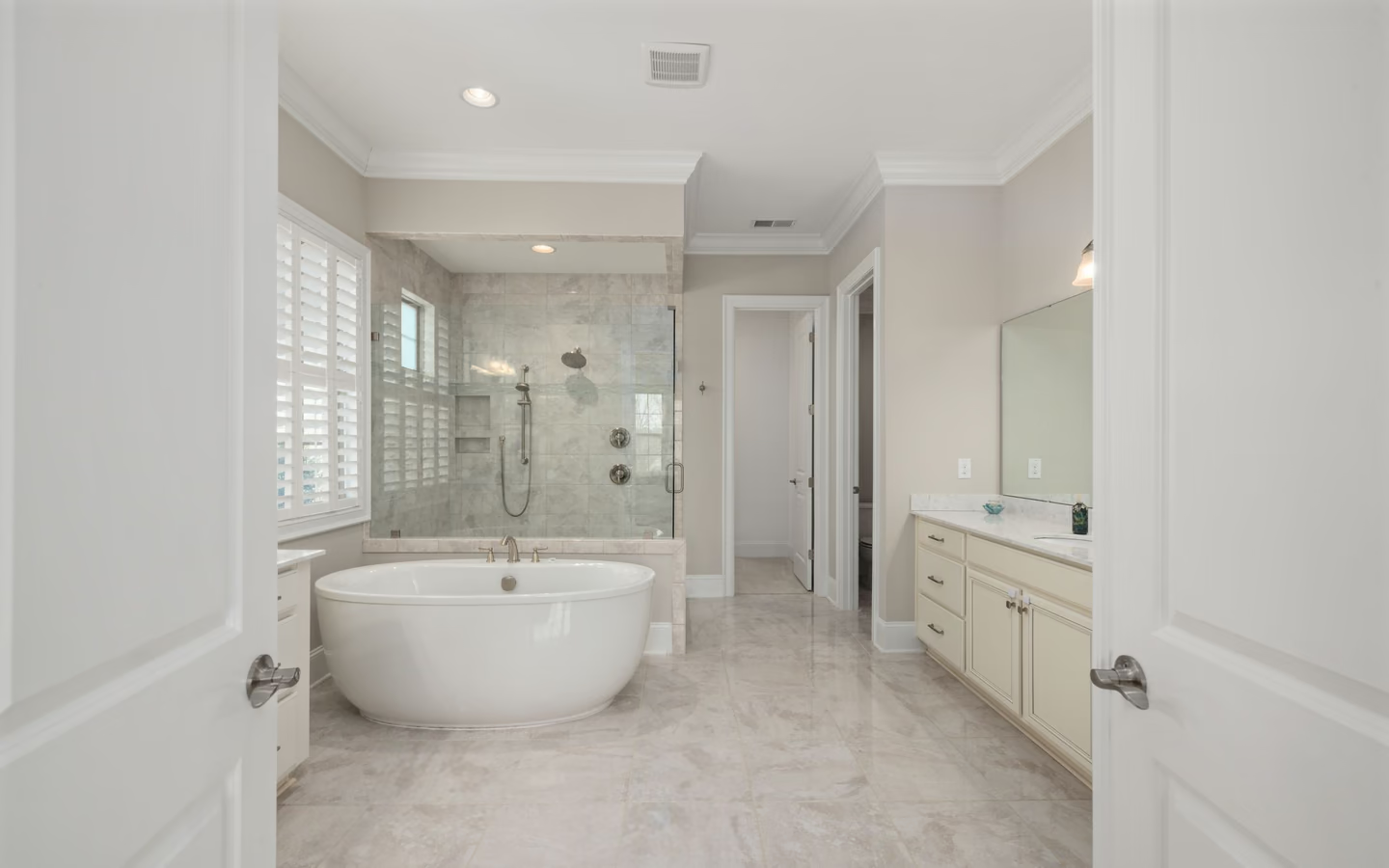
Under the model residential code, bathrooms require ventilation, and mechanical exhaust is required where the window option is absent; local amendments frequently tighten this further. The exhaust must discharge outdoors through a duct sized and terminated per the code's exhaust provisions, never into an attic, soffit, or crawl space. If your bathroom currently has no fan, adding one during any remodel is one of the highest-value systems decisions available in the room.
The health rationale carries as much weight as the rule. Public-health guidance on indoor dampness is unambiguous: persistent moisture supports mold growth, and the way to prevent mold is to control moisture at its source. A bathroom is a designed moisture source; the fan is the designed control. A window helps when weather, season, and habit cooperate, which is to say occasionally.
What doing it right involves
A working installation is four decisions: a certified fan sized to the room's dimensions, a duct route as short and straight as the house allows, a dampered outdoor termination, and a control that actually gets used. Certified airflow and sound ratings let you compare units honestly; a quiet fan earns daily use, and daily use is the entire point. The duct and termination usually cost more than the fan, which is why bids differ more on the route than on the unit.
Timing matters: adding exhaust during a remodel, while the ceiling is open and trades are present, is dramatically cheaper than as a standalone retrofit later. If a remodel is genuinely planned, fold the ventilation in; if not, the moisture is working on the room now, and waiting has its own cost.
Your situation, and the sensible move
Three common starting points cover most homes. Find yours.
| Topic | What is true today | The sensible move |
|---|---|---|
| No fan at all | Moisture leaves through a window, a door, and the house itself; mirrors stay fogged and paint ages fast. | Install proper exhaust: standalone, or folded into any planned remodel while walls and ceiling are open. |
| A fan that is loud or weak | A unit exists but the household avoids running it, or it runs without clearing the room. | Verify the duct and termination first; a quiet certified unit on a bad duct stays a bad system. |
| A fan nobody runs long enough | The hardware works; the habit does not. Moisture lingers after every shower. | Add a humidity-sensing or timer control so run time stops depending on memory. |
Questions for the installer
- Where will the duct terminate, exactly?
The only acceptable answers end outdoors through a proper fitting. An answer that gestures toward the attic or soffit is a plan to relocate your moisture problem into the structure.
- What size and rating fan does my room need?
The answer should reference the room's dimensions and certified airflow ratings, not just duct diameter or brand. Oversizing and undersizing both fail, differently.
- How will it be controlled?
Switch, timer, or humidity sensing changes daily behavior more than any hardware choice. Ask what the wiring supports and what each option adds.
- What finish repair does the route require?
The route's ceiling and wall repair belongs in the written scope. A bid silent on repair is a bid that has not committed to a route.


Common questions
Frequently asked questions
My bathroom has a window. Am I exempt from needing a fan?
Some code editions treat an operable window as baseline ventilation, and your local amendments decide the rule for your address. Practically, a window only works when it is open, which excludes winter, summer, rain, and privacy; a mechanical exhaust works every shower regardless.
Can I vent the fan into the attic if the attic is vented?
No. Model codes require exhaust to discharge outdoors, and attic venting exists to manage the attic's own conditions, not to absorb a bathroom's moisture load. Attic discharge deposits humidity onto framing and insulation, exactly where dampness guidance says moisture must not accumulate.
How long should the fan run after a shower?
Until the room's moisture is actually cleared, which commonly takes a while beyond the shower itself and is one reason timer and humidity-sensing controls outperform memory. If surfaces are dry and the mirror is clear, the run was long enough.
Sources and methodology
Research & methodology
Sources
References supporting the planning guidance on this page.
- Ventilation FansENERGY STAR
- 2024 International Residential Code, Chapter 15: Exhaust SystemsInternational Code Council
- About MoldCenters for Disease Control and Prevention
Share your project. Call when ready.
Turn your research into a clear project request
Share your project, full service address, and contact details securely, then call when you are ready to discuss availability with an independent professional.