Planning and budgeting guide

What moving things actually sets in motion

Moving a fixture looks like one decision and prices like five. This guide traces what each layout change pulls behind it, plumbing and venting routes, structural touches, electrical relocation, extra demolition, permit involvement, and the finish restoration that follows every opened surface, so each proposed move can be judged on full consequences.

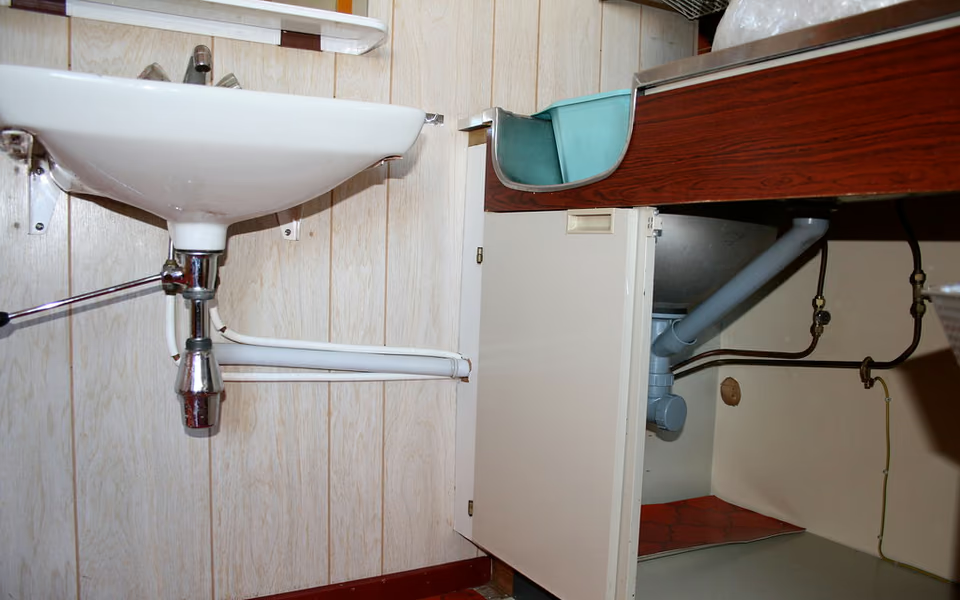
Bathroom renovation with plumbing routes exposed beneath the floor
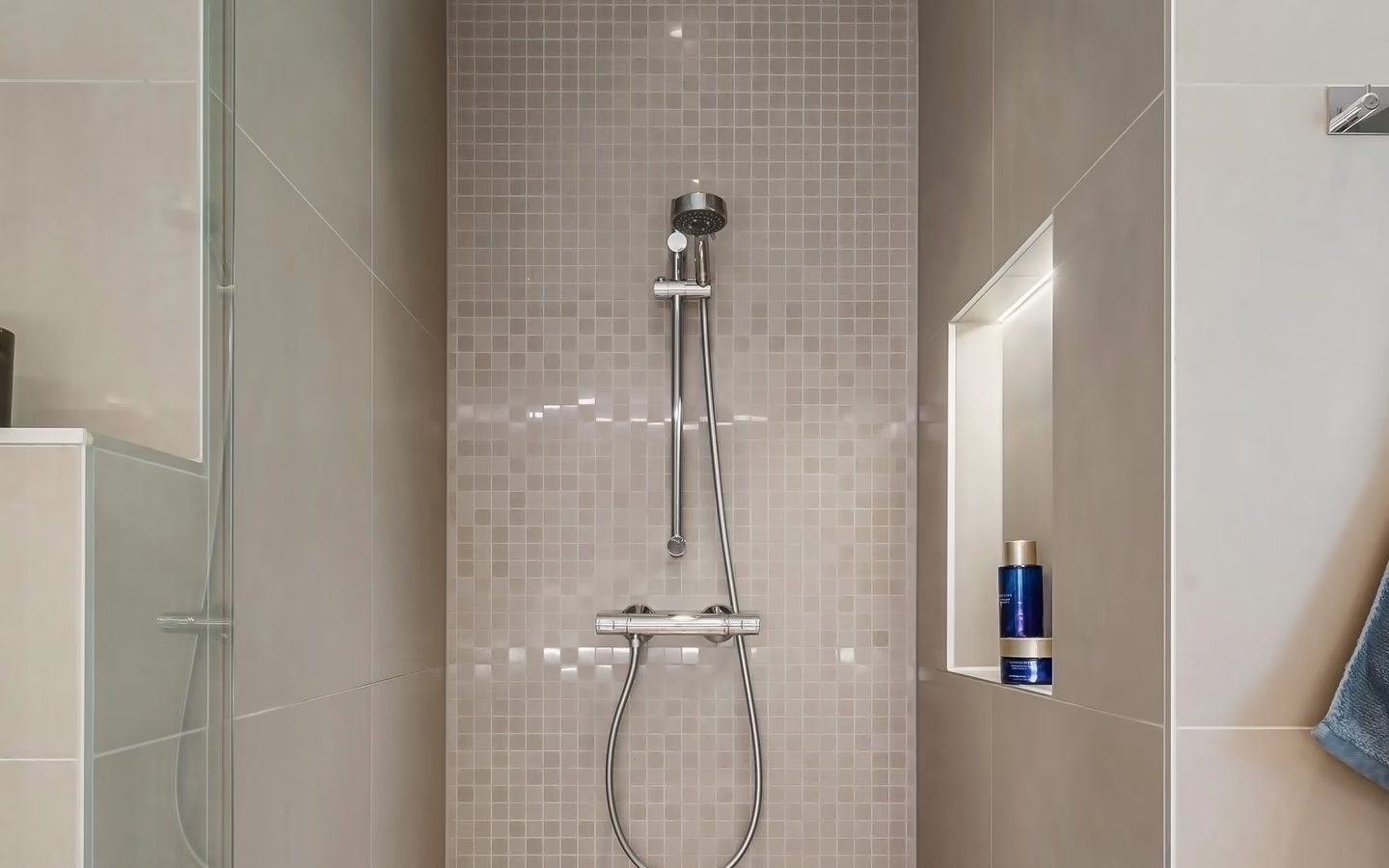
Hesttrøa 7 - New bathroom project

How to evaluate a proposed move

Name the problem the move solves in one sentence before pricing anything. A door that collides with the vanity, a shower entered sideways, a toilet as the first thing seen from the hall: these are real problems worth real money. A layout that merely differs from the current one is not a problem statement, and moves without problem statements are how budgets dissolve.

Then trace the chain with your professional: what the move requires below the floor and inside the walls, what it disturbs along the route, and what must be restored afterward. Ask for the chain in writing per move, priced separately from the rest of the project, so each relocation can be accepted or declined on its own merits.

The consequence chains behind common moves

Drainage moves carry the heaviest chains. Toilets and showers depend on drain diameter, slope, and venting geometry; relocating them means new routes through structure that was not framed for them, and every foot of route is demolition plus restoration. The same fixture moved along a wet wall a short distance can be reasonable where a cross-room move is not, which is why direction and distance matter more than the fixture itself.

Supply and electrical moves are lighter but not free. Valves, outlets, lighting, and switching relocate with their protection and support requirements, and each opened wall face joins the restoration bill. Moves that ride along with already-planned demolition are the bargains; moves that open otherwise-finished surfaces are the traps.

The quiet multiplier is restoration. Every route opened for a move must be closed, flattened, and refinished to match, and matching existing finishes often costs more than the trade work that made the hole. When a professional prices a move surprisingly high, restoration is usually why, and it is the honest part of the number.
Common moves and what each pulls behind it

Chains vary by home, but the pattern per move is stable. Use the rows to structure the pricing conversation.

Layout moves with their typical consequence chains.
TopicThe chain it triggersWhen it tends to be worth it
Toilet relocationNew drain route and venting, structural passage, floor restoration.Privacy or clearance problems the current position makes unsolvable.
Shower or tub moveDrain and valve routes, waterproofing extent, framing adjustments.A footprint change that unlocks the room's whole plan, not just the corner.
Vanity shiftSupply and drain stubs, electrical relocation, wall patching.Short moves along the same wet wall that fix real clearance conflicts.
Door or opening changeFraming, casing, flooring transitions, and swing-clearance ripples.Entry collisions and privacy sightlines nothing else can fix.
Footprint expansionStructure, systems extension, and a second room's restoration.The bathroom's problems genuinely cannot fit inside its walls.

Before authorizing any move

Every relocation on the plan should survive this list before it gets priced into the project.

Justify

  • The problem it solves, written in one sentence

  • Why solving it in place was rejected

  • Who in the household feels the improvement daily

Trace

  • The full chain in writing: routes, structure, restoration

  • What the route passes through and what that disturbs

  • Permit and inspection involvement the move adds

Decide

  • The move priced separately so it can be declined alone

  • The fallback plan if opening reveals the route is blocked

  • Which moves ride along with planned demolition anyway

Bring these questions to the conversation

  • What does this move require that the room hides?

    Invites the full chain: routes, venting, structure, restoration. The completeness of the answer is a preview of the change-order future.

  • Is there an in-place solution you would try first?

    Professionals often know a clearance, swing, or fixture-scale fix that solves the stated problem without opening a route. Cheaper solved is still solved.

  • Which of my proposed moves is the least worth its chain?

    Gives the estimator permission to rank rather than defend the whole plan. The answer frequently recovers meaningful budget with no felt loss.

  • What happens if the route turns out to be blocked?

    Structure and existing services sometimes veto a route after demolition. Agree now whether the fallback is a shorter move, an in-place plan, or a priced redesign.

Common questions

Frequently asked questions

Is keeping the layout always the cheaper choice?

Almost always in direct cost, but a layout that fails daily has its own price paid in use. The comparison worth making is move-cost against problem-cost, which is why the one-sentence problem statement per move matters.

Why do two similar moves price so differently?

Because chains differ invisibly: route length, what the route passes through, venting geometry, and how much finished surface must be restored. The fixture is the visible tip of a mostly concealed decision.

Sources and methodology

Research & methodology

Sources

References supporting the planning guidance on this page.

  1. Occupational Employment and Wage StatisticsU.S. Bureau of Labor Statistics
    Government sourceAccessed
  2. Bathroom Planning GuidelinesNational Kitchen & Bath Association
    Trade sourceAccessed

Share your project. Call when ready.

Turn your research into a clear project request

Share your project, full service address, and contact details securely, then call when you are ready to discuss availability with an independent professional.