
Smart bathroom cost guide
Provisioning is the durable spend
Smart bathroom budgets divide into devices and provisioning: control swaps into cooperative boxes bill modestly, neutral-less boxes and fixture outlets add electrical hours, and valve-grade water control adds plumbing. The modeled scenario prices intelligence installed honestly, fallbacks included.
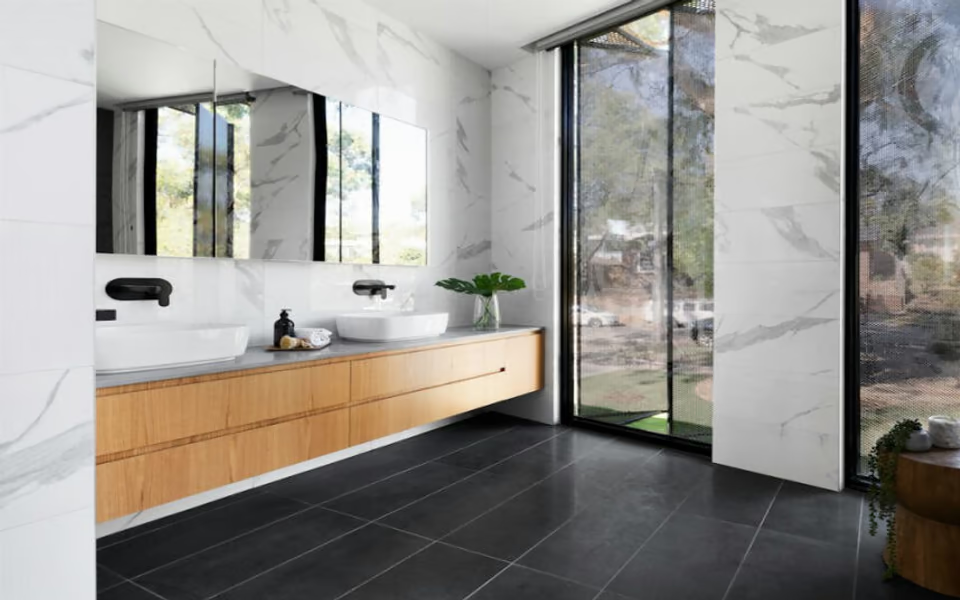
Cost overview
What should a smart bathroom upgrades budget cover?
Smart bathroom features are most useful when they solve a clear routine and still work safely through app changes, network outages, account transfers, power loss, maintenance, replacement, and ordinary manual control. A useful budget follows the complete written scope from preparation through installation, connected work, verification, cleanup, and closeout. It is tied to one room and one project option, not a broad average.
Modeled planning range
$3,500 to $9,500
Across 1 standardized smart bathroom upgrades scenarios, from the smallest published scope to the largest. Each figure resolves through the approved pricing methodology and is valid through 2027-02-09. Match a range to your room with the calculator below.
Start with the project option, then list the included work, products or allowances, retained conditions, access, procurement, and schedule assumptions that each proposal must price or exclude. Work may coordinate powered mirrors, lighting scenes, fan controls, bidet or smart toilets, digital showers, leak sensors, floor heat, speakers, and related circuits, plumbing, networks, privacy, and service access.
Two totals become comparable only when they cover the same responsibilities. Use the realistic bathroom budget guide to organize the broader household budget, then use this page to normalize the construction scope.
Write these five facts before requesting prices
Each fact closes a common gap between an early estimate and a buildable proposal. Keep the same answers with every professional so differences in price are easier to explain.
Choose the project option that best matches the planned smart bathroom upgrades scope
Work may coordinate powered mirrors, lighting scenes, fan controls, bidet or smart toilets, digital showers, leak sensors, floor heat, speakers, and related circuits, plumbing, networks, privacy, and service access.
Name the included work: use-case and product-longevity review, power, plumbing, network, and control coordination, installation, commissioning, account, and manual-use setup
Mark separate or conditional work: home-network redesign, ongoing subscription fees, guaranteed future software support
Record the schedule assumptions: feature count and compatibility, new power or plumbing, commissioning and account setup
Project levels
Which project level are you pricing?
Compare the available smart bathroom upgrades options by what stays, what changes, and which connected systems or surfaces each option affects.
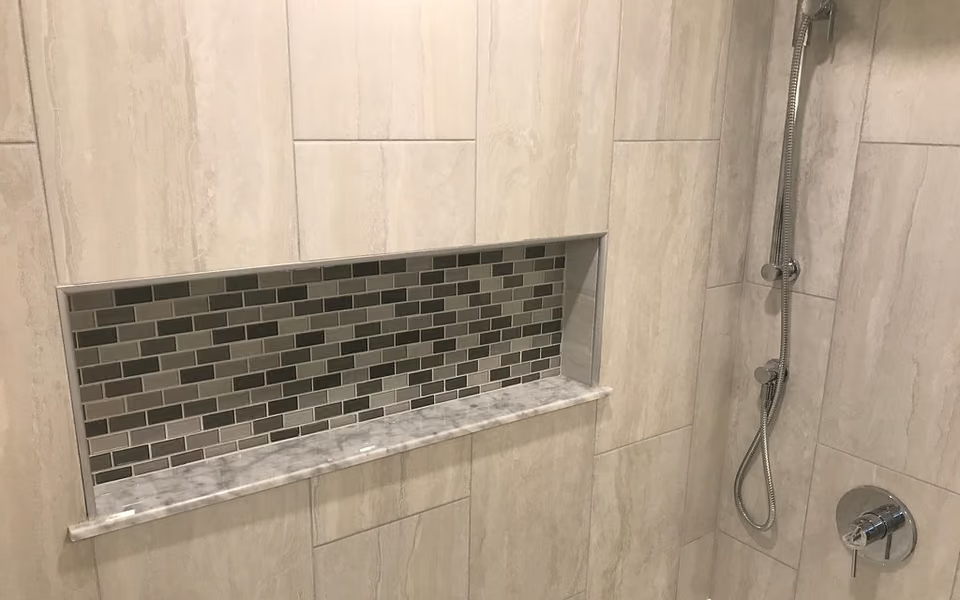
Define the complete project
The visible product does not define the whole installation.
Work may coordinate powered mirrors, lighting scenes, fan controls, bidet or smart toilets, digital showers, leak sensors, floor heat, speakers, and related circuits, plumbing, networks, privacy, and service access. A quote should connect the visible result to its preparation, affected systems, surrounding finishes, and completion criteria.
| Decision | What the level usually includes | What the quote should settle |
|---|---|---|
| Practical automation | Use occupancy, timer, humidity, lighting, heating, or leak-monitoring controls that reduce repeated manual tasks. | Define the retained work, affected systems, products, preparation, exclusions, responsibilities, and completion criteria for this option. |
| Integrated feature suite | Coordinate mirrors, showering, toilet, sound, lighting, heat, sensors, apps, and scenes with a fallback plan. | Define the retained work, affected systems, products, preparation, exclusions, responsibilities, and completion criteria for this option. |
The visible product does not define the complete installation. Review the smart bathroom upgrades project guide for the room systems, preparation, and proposal decisions behind each option.
Cost drivers
What changes smart bathroom upgrades cost?
The main cost drivers are layout and plumbing routes, wet-area construction, products and finish level, existing conditions, and labor logistics. Open each driver, mark what applies to the room, and add the verification questions to your proposal request.
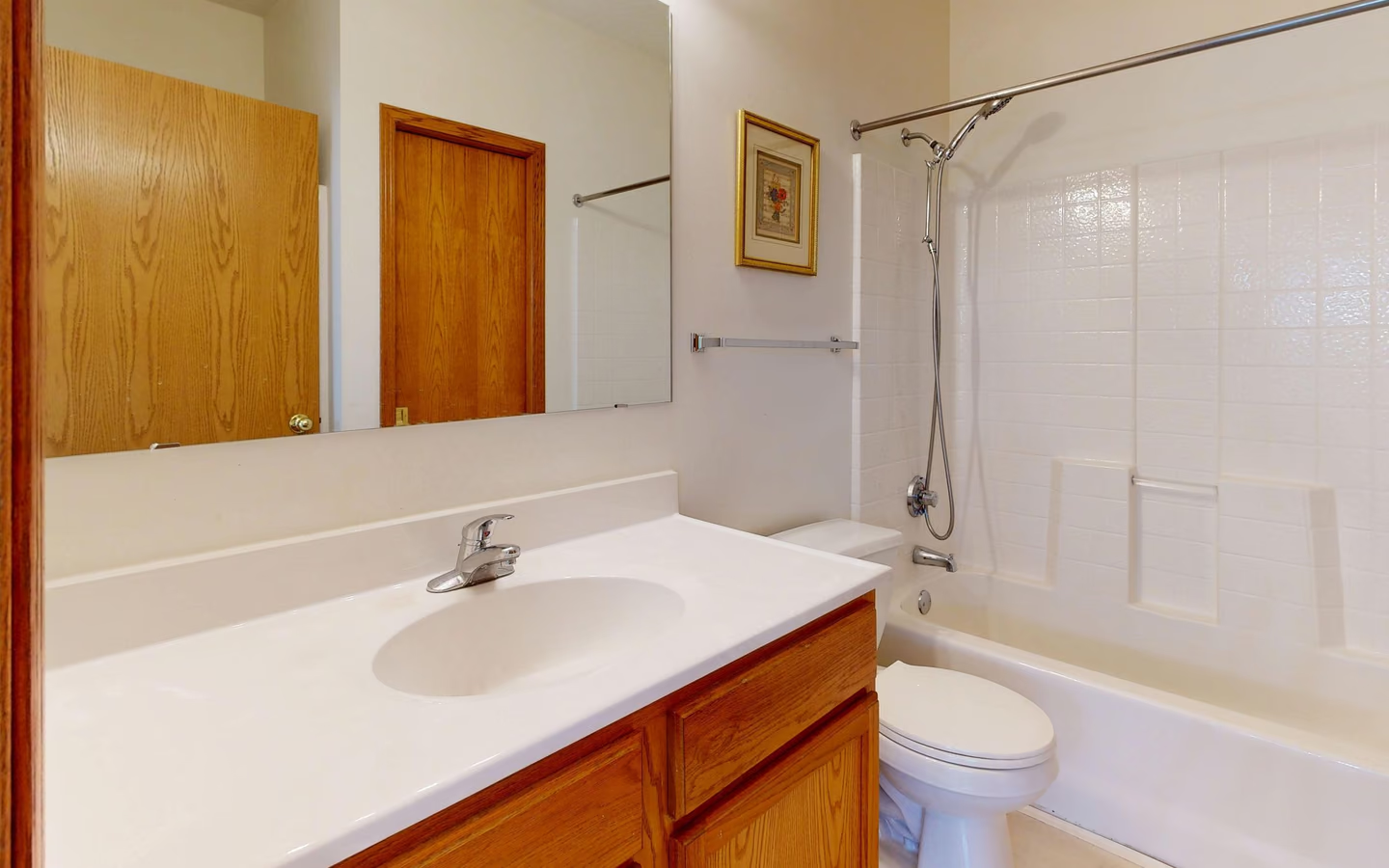
Written scope
Why it changes cost
Work may coordinate powered mirrors, lighting scenes, fan controls, bidet or smart toilets, digital showers, leak sensors, floor heat, speakers, and related circuits, plumbing, networks, privacy, and service access.
What to verify
Confirm what is included, what remains, and what is separate for smart bathroom upgrades.
What happens without the app or internet?
Why it changes cost
Confirm manual operation, local controls, account transfer, updates, privacy, reset, compatibility, and replacement paths.
What to verify
Ask each proposal to state the selected direction, affected work, assumptions, and decision deadline.
Can concealed components be serviced later?
Why it changes cost
Plan accessible power supplies, valves, controllers, transformers, sensors, filters, batteries, and documented shutoffs.
What to verify
Ask each proposal to state the selected direction, affected work, assumptions, and decision deadline.
Existing conditions
Why it changes cost
Software, cloud services, integrations, and subscriptions can change before the surrounding bathroom wears out. Powered plumbing fixtures and wet-location electronics require coordinated listed products and qualified installation.
What to verify
Document what was observed, what remains concealed, and how discoveries change scope, price, and timing.
Products and sequence
Why it changes cost
Smart features add product research, infrastructure, rough-in, setup, update, integration, and troubleshooting steps to the underlying remodel.
What to verify
Confirm selections, lead times, installation dependencies, and completion checks for use-case and product-longevity review, power, plumbing, network, and control coordination, installation, commissioning, account, and manual-use setup.
Calculator
Prepare three versions of the same project
A calculator is most useful as a comparison tool. Keep the room and base scope the same, then change one decision at a time so you can see which choice deserves a separate quote line.
Bathroom remodel cost planner
Choose the scope dimensions that match the approved scenarios. The calculator uses only a current immutable pricing publication.
Comparing quotes
What should a complete written quote contain?
A complete written quote ties its price to the room, scope, products, allowances, responsibilities, schedule, payment terms, and change rules. You should be able to mark every major item as included, excluded, allowed for, or still unresolved.
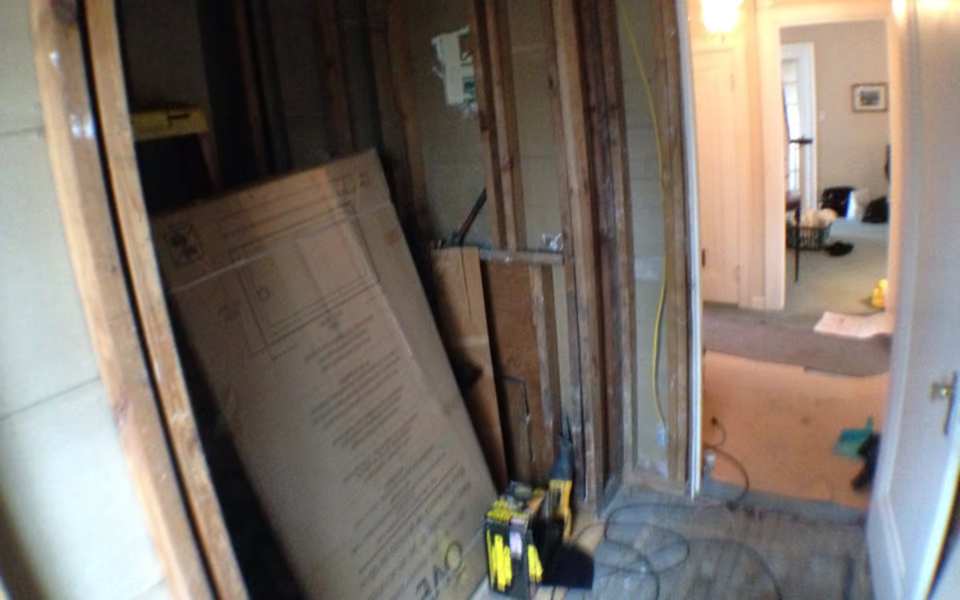
Normalize the scope
A lower total may simply describe less work.
Open walls and rough plumbing show why a finished-room price needs a detailed scope. Align preparation, quantities, products, transitions, exclusions, and change procedures before deciding which proposal is more complete.
Compare estimate detailsWork and selections
- A room-specific scope showing what stays, what is removed, what moves, and what is repaired or replaced
- Responsibility for demolition, framing, plumbing, electrical, ventilation, wet-area work, surfaces, fixtures, glass, and paint
- Named products or allowances with quantities, accessories, freight, tax treatment, fabrication, installation materials, and substitution rules
Conditions and responsibilities
- Protection, access, working hours, deliveries, storage, debris handling, cleanup, and bathroom-availability plans
- Investigation limits and a written process for documenting, authorizing, pricing, and scheduling concealed work
- Permit, inspection, design, engineering, testing, owner-supplied, and work-outside-the-room responsibilities
Price, schedule, and closeout
- A price tied to the written scope, allowances, alternates, exclusions, payment milestones, and change-order rules
- Procurement, demolition, rough work, inspections, fabrication, installation, cure time, and final-review milestones
- Final walkthrough, corrections, care information, product documents, lien or payment closeout, and warranty responsibilities
How the price behaves
Where a bathroom budget actually moves
Two proposals can start at the same number and end far apart. What separates them is usually how labour, allowances, and changes were handled once work began.
Labour and materials do not move together
Materials are the part of a bathroom you choose, and their cost is largely under your control: a tile at three times the price of another covers the same wall. Labour is the part you buy indirectly, and it tracks how much work the room actually requires. Doubling the tile budget does not change the hours needed to set it. Moving a drain does.
This is why finish-level upgrades and scope changes feel so different on a proposal. Upgrading a vanity is a material substitution with a predictable delta. Relocating that vanity is a labour and rough-in change, and it pulls plumbing, electrical, patching, and inspection along with it. When a budget needs to come down, material substitutions are usually the least painful lever, because they do not disturb the parts of the room you cannot see.
Allowances are placeholders, not prices
An allowance is a sum a professional carries for something you have not chosen yet: tile, fixtures, a vanity, glass. It is an honest way to price a project before every selection is final, and a common way for two proposals to look different when they are not. A lower total may simply mean lower allowances, which surfaces later as a supplier invoice rather than as a discount.
Ask what each allowance assumes, at what price per unit, and what happens if you exceed it. An allowance quoted per square foot for tile is checkable against real products before you sign. An allowance stated only as a lump sum is not.
Change orders are where the final number is decided
A change order is any addition or alteration agreed after the contract is signed. Some are chosen, such as deciding mid-project to add a niche or upgrade glass. Others are discovered, such as finding damaged framing once the wall is open. Both change the price, and it is the second kind that surprises people, because bathrooms conceal their condition until demolition.
What protects a budget is not avoiding change orders, which is not realistic, but agreeing in advance how they are handled: that they are priced and written before work proceeds, that they carry their own schedule impact, and that nobody is doing extra work on a verbal nod and invoicing it later. Ask how change orders are priced, approved, and documented before you choose a professional. It tells you more about a contractor than the headline number does.
Why this guide does not quote a price for your city
Local labour rates and material availability do vary, and a serious cost model has to account for them. What is not defensible is inventing a local figure by applying a regional multiplier to a national average and presenting the result as a quote for a specific address.
CallBathroom publishes a numeric range only where it resolves through an approved scenario in the canonical pricing system, bound to a reviewed methodology, a dated input pack, and a validity window. Where that binding does not exist, the page explains the drivers and stays nonnumeric rather than showing a figure it cannot stand behind. A range you can trace is more useful than a range that merely looks precise.
Next steps
Turn cost research into a project brief
Choose the next resource that matches where you are in the project, then keep the same scope assumptions with every professional you contact.
Quick answers
Cost questions not covered above
What should a smart bathroom upgrades quote include?
The quote should tie its price to the written smart bathroom upgrades scope, products or allowances, preparation, connected work, responsibilities, exclusions, schedule assumptions, and change process.
What should happen when an allowance is exceeded?
The proposal should state the allowance basis and whether it includes tax, freight, accessories, and installation. A selection above that amount should be documented and approved before ordering, together with any schedule effect.
Should permits, design, and testing appear in the quote?
Yes. Each should be marked as included, excluded, an allowance, or the responsibility of another party. The quote should also identify who schedules inspections and what must be approved before work can continue.
Ready for room-specific prices?
Bring one defined scope to every conversation.
Use the same project level, layout, selections, and open questions with each professional so the resulting proposals are easier to compare.
Detailed approved cost guidance
What sets a smart upgrade's total?
Wiring depth leads: humidity fan controls and smart switches install briskly where neutrals exist, add hours where they do not, and fixture intelligence, smart toilets, digital showers, prices as outlets and circuits placed at renovation's discount. Auto-shutoff water control adds licensed plumbing with power at the valve.
The value ledger runs opposite gadget pricing: moisture automation and leak protection, the cheapest tiers, carry the largest expected returns; glamour features price as the conveniences they are.
What the modeled scenario assumes
The modeled range holds these baseline conditions; where your project differs, expect the difference as a written scope line.
| Topic | The model assumes | Why it matters to the number |
|---|---|---|
| Room scale | A typical full-bathroom footprint of roughly 61 to 100 square feet, 80 typical. | Area drives surface quantities and working room; unusual rooms move labor before they move materials. |
| Site access | Occupied detached or attached residence with ordinary interior access | Restricted access and occupied-hours limits stretch labor days without changing the visible scope. |
| Written scope | Work may coordinate powered mirrors, lighting scenes, fan controls, bidet or smart toilets, digital showers, leak sensors, floor heat, speakers, and related circuits, plumbing, networks, privacy, and service access. | The scenario prices this defined work; adjacent wishes belong to their own scope lines. |
| Taxes, permits, concealed conditions | Material sales tax sits inside the allowances; permit fees and concealed-condition repair are excluded and disclosed separately. | Both vary by jurisdiction and by what work reveals; averaging them into a national range would fake certainty. |
How the written scope typically varies
Project options from the service's own planning guidance; find the option closest to your intent before comparing any number.
| Topic | What the option involves | What tends to decide its spend |
|---|---|---|
| Practical automation | Use occupancy, timer, humidity, lighting, heating, or leak-monitoring controls that reduce repeated manual tasks. | Chiefly feature count and compatibility, new power or plumbing, commissioning and account setup. |
| Integrated feature suite | Coordinate mirrors, showering, toilet, sound, lighting, heat, sensors, apps, and scenes with a fallback plan. | Chiefly feature count and compatibility, new power or plumbing, commissioning and account setup. |
Modeled planning ranges by scenario
Each row is one modeled national scenario from the published methodology. The range shown reflects the current published figures; the driver column tells you what moves a real project inside it.
| Scope factor | Modeled planning range | What changes it |
|---|---|---|
| Smart upgrades: automated air, scheduled comfort, water awareness | $3,500 to $9,500 | Box findings at each control point, fixture outlet provisioning, valve-grade water control if chosen, and device tiers. |
Included, separate, and verify-first
Hold any proposal against these lists before comparing its total to a modeled range.
Inside the modeled ranges
use-case and product-longevity review
power, plumbing, network, and control coordination
installation, commissioning, account, and manual-use setup
Priced separately when they apply
home-network redesign
ongoing subscription fees
guaranteed future software support
Permit and inspection fees where the jurisdiction requires them
Findings behind device compatibility and software longevity, priced as disclosed change orders
Verify before signing
Box findings, neutrals and protection, stated per control point
Fallback behavior described for every automation
Valve work scoped as plumbing where water control is real
Comparing smart-upgrade proposals
Wiring before wizardry
- Gadget lists without box findings price someone else's walls; the neutral check is the quote's foundation.
Offline behavior stated
- Every device's network-down manners in writing: the bathroom must work during the router's bad day.
Water control as plumbing
- Shutoff valves with judgment install as licensed work with power; sensor-only pricing sells half the protection.
Guest test promised
- Plain-gesture operation verified without briefing: intelligence that needs onboarding fails its species.
Common questions
Frequently asked questions
Which smart spend returns the most?
Humidity-sensing fan control, almost universally: modest cost, daily moisture automation, invisible operation. Leak sensing with real alerts follows as the cheapest serious insurance in the house.
What do older switch boxes add to the bill?
Neutral runs or device workarounds: the box check before buying converts the classic incompatibility drawer into a known line. Renovation timing erases most of the premium.
Are auto-shutoff valves worth their install?
For travel habits, upper floors, or water history, decisively: minutes of response instead of hours of absorption, priced as real plumbing with power. Stick-on sensors alone watch; valves act.
What does a smart toilet actually require?
The outlet tradition never installed: a protected receptacle at the fixture, trivial during renovation and awkward after. The comfort electronics ride the appliance; the provisioning is the project.
How do I avoid paying for abandoned cleverness?
Buy automation only for named habit failures, keep every fallback manual, and stay inside one ecosystem: intelligence that survives is intelligence that disappeared into routine.
Sources and methodology
Research & methodology
Sources
References supporting the planning guidance on this page.
- Occupational Employment and Wage StatisticsU.S. Bureau of Labor Statistics
- Regional Price Parities by State and Metro AreaU.S. Bureau of Economic Analysis
- The WaterSense LabelU.S. Environmental Protection Agency WaterSense
- Ventilation FansENERGY STAR
- Bathroom Planning GuidelinesNational Kitchen & Bath Association
Sources and reference notes
These references support the remodeling, planning, and safety context used in this guide.
- The WaterSense LabelU.S. Environmental Protection Agency WaterSense
- Ventilation FansENERGY STAR
- Bathroom Planning GuidelinesNational Kitchen & Bath Association